The Cross of Vistabella, Roger Miralles
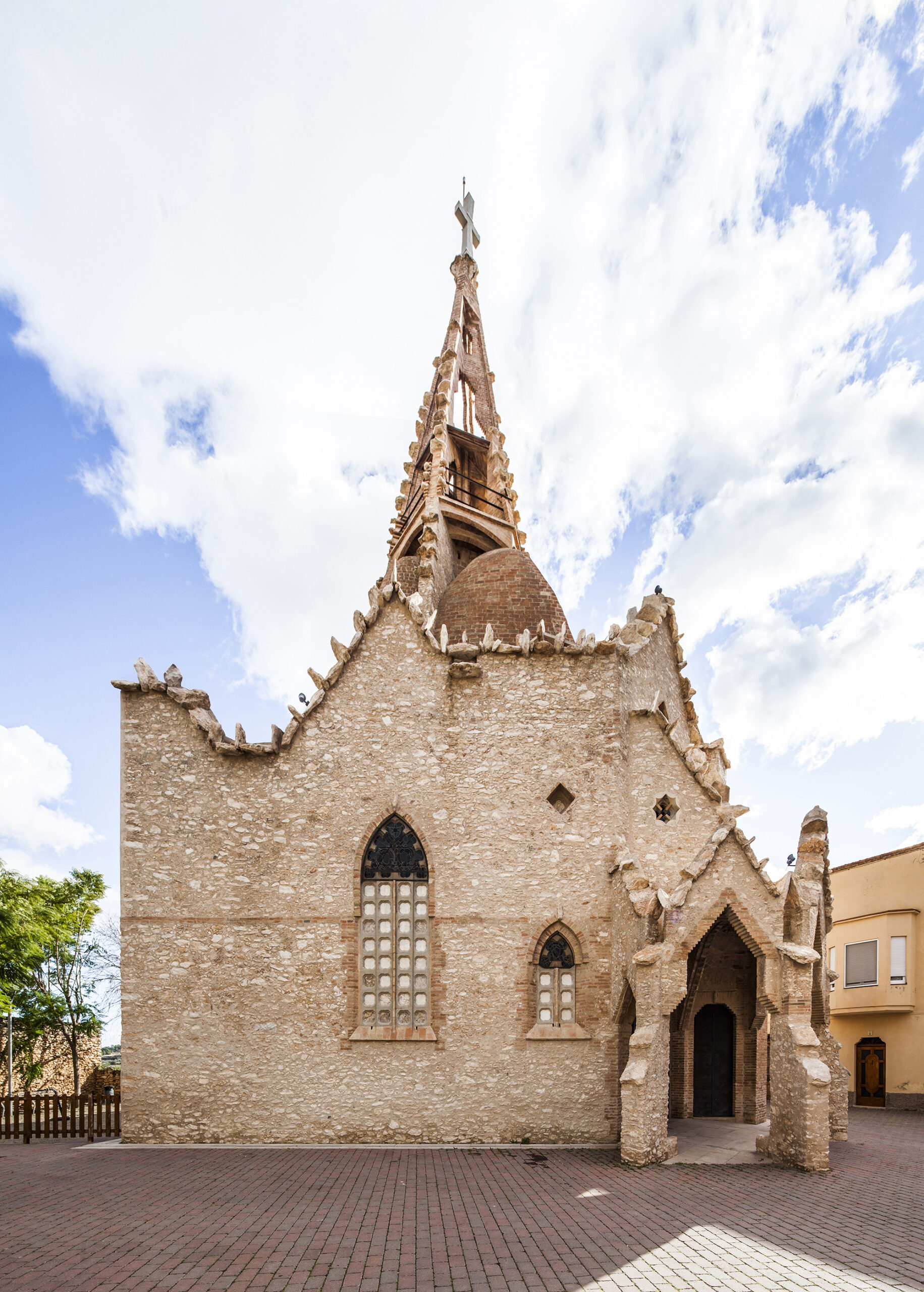
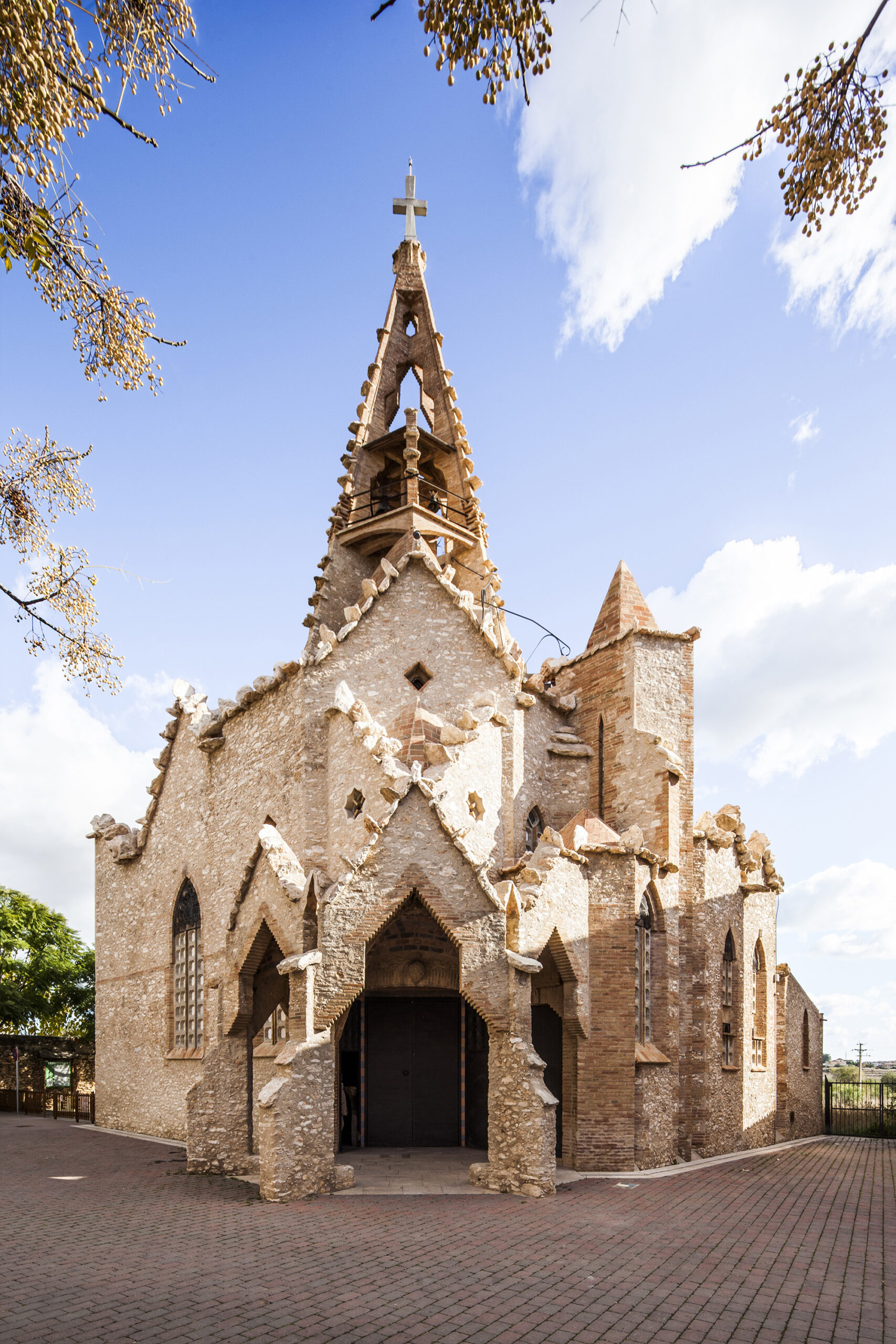
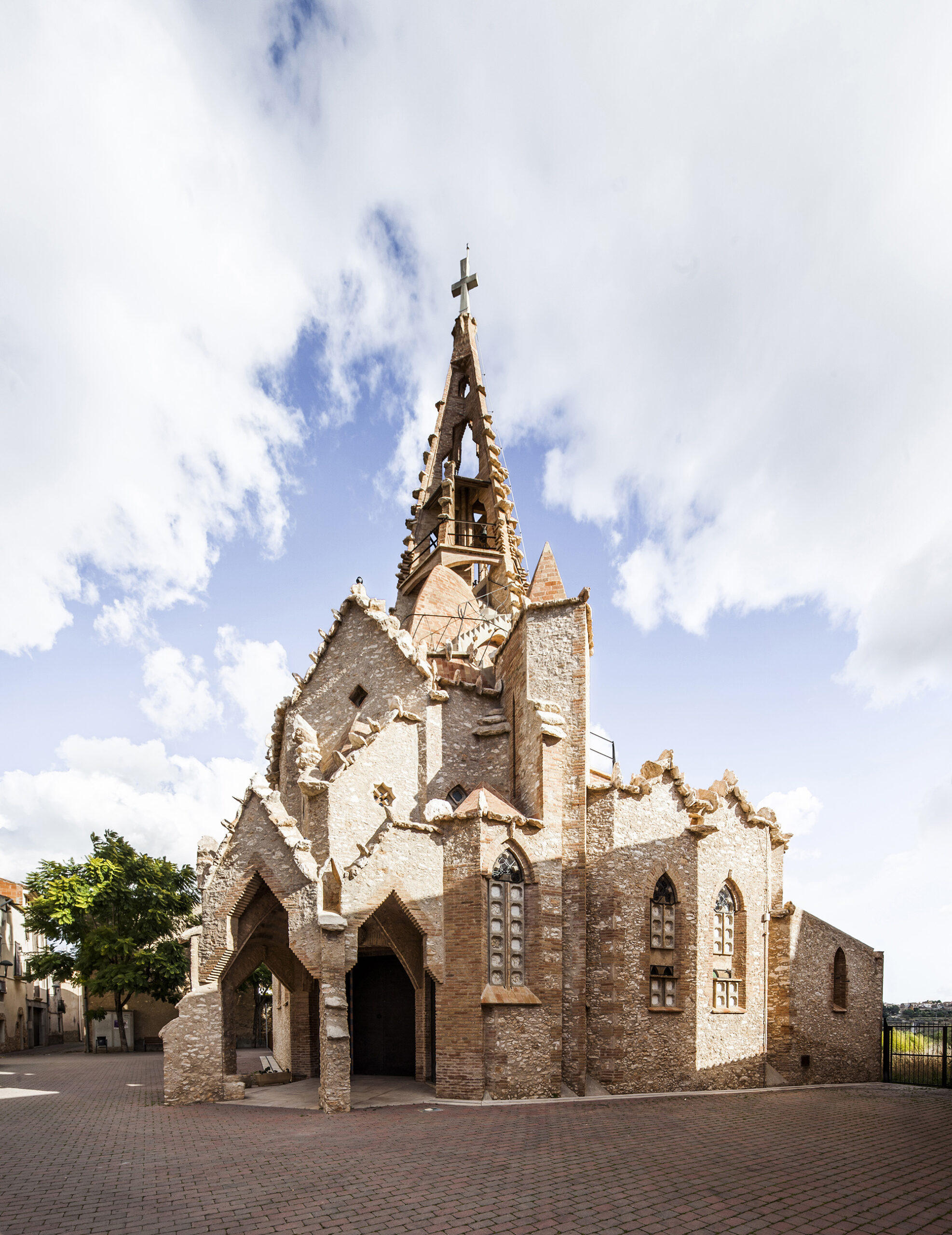
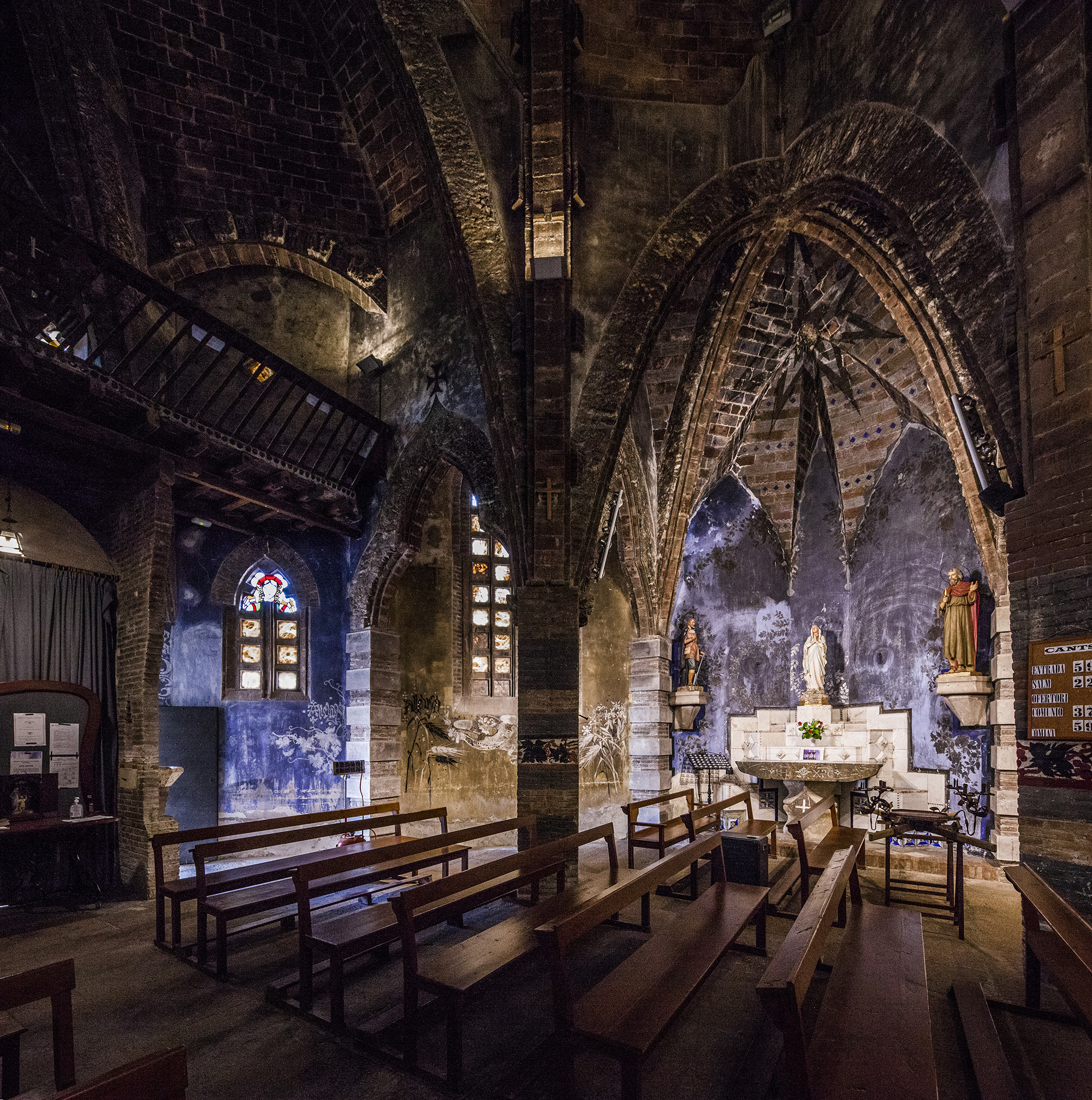
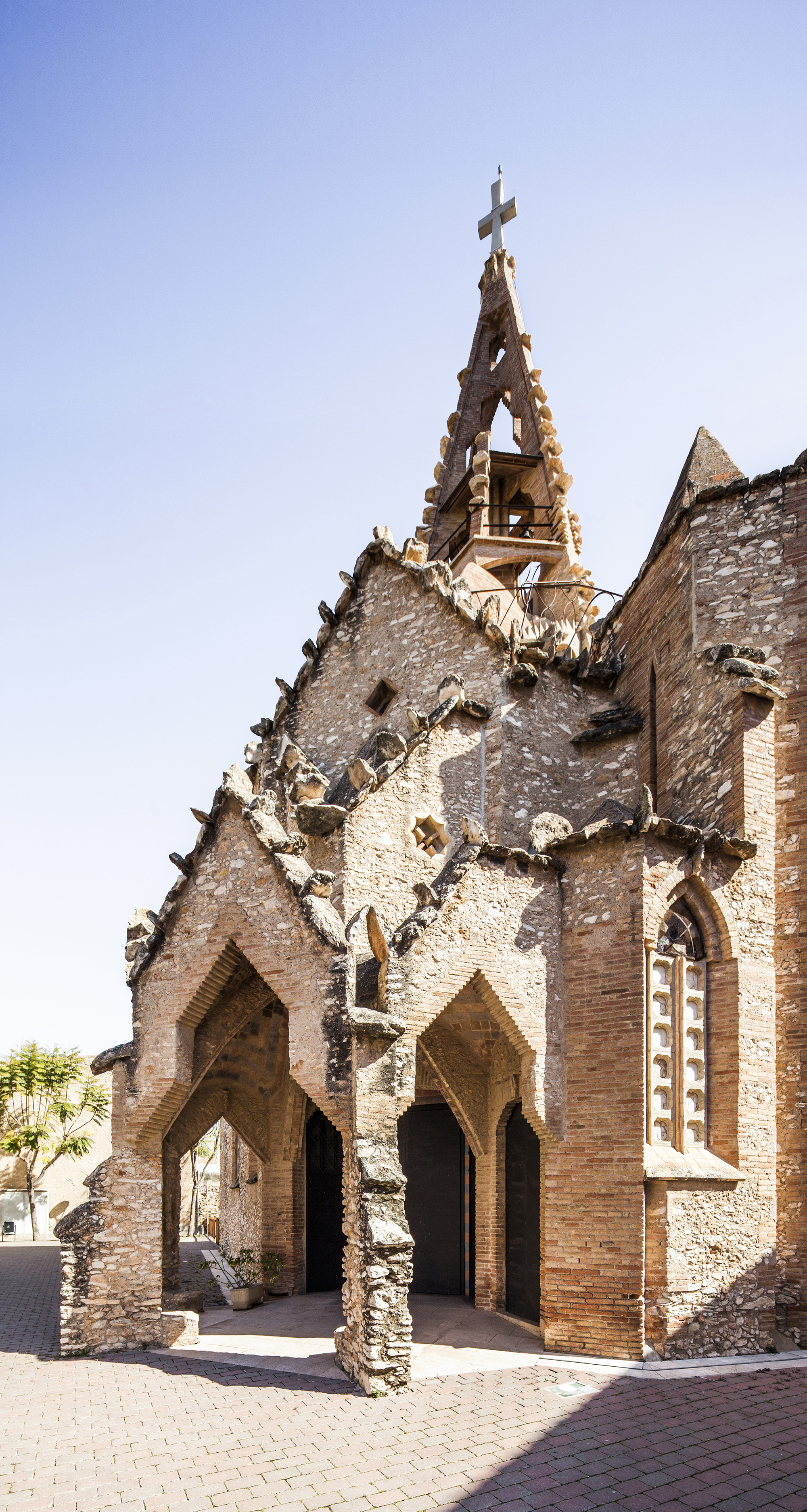
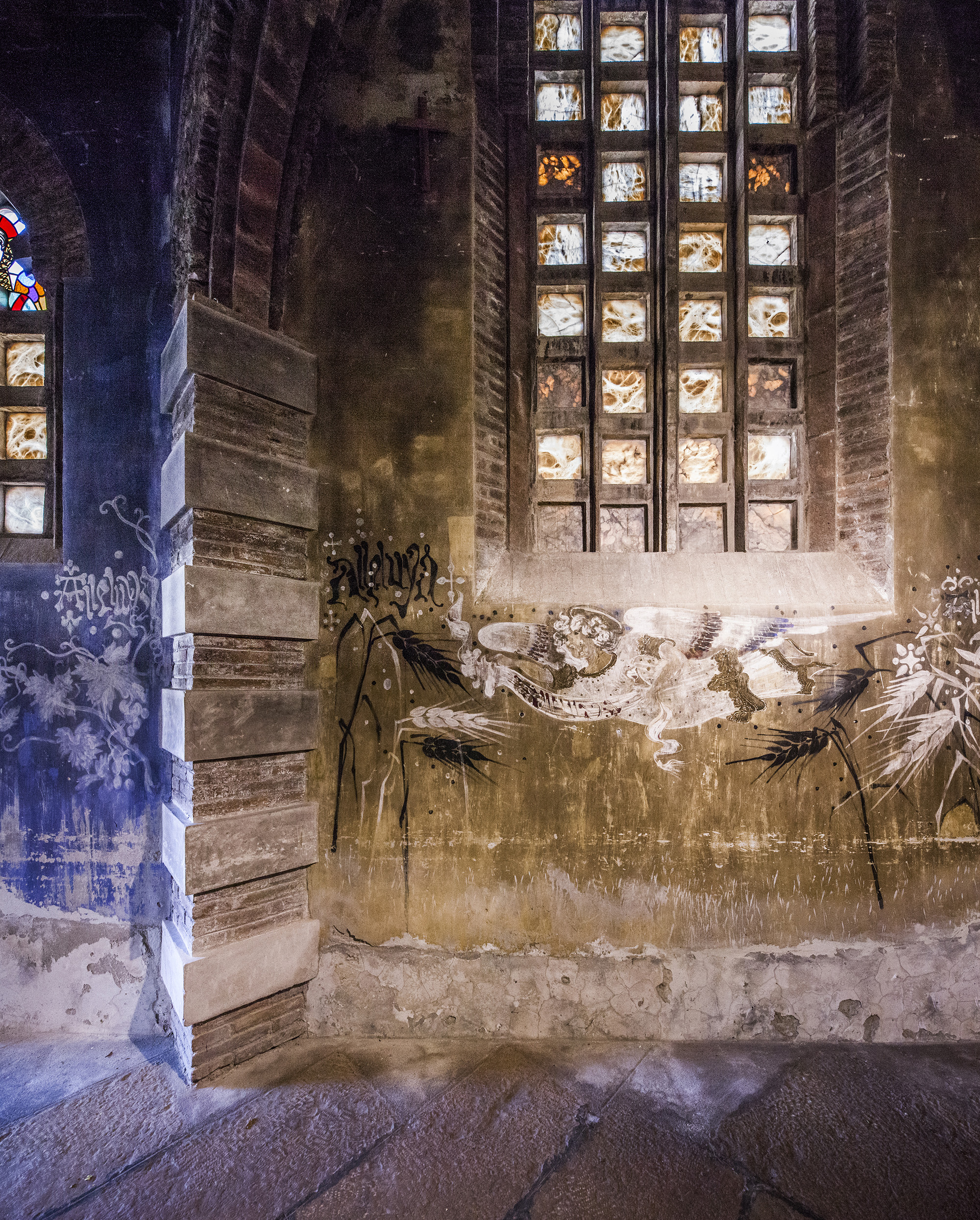
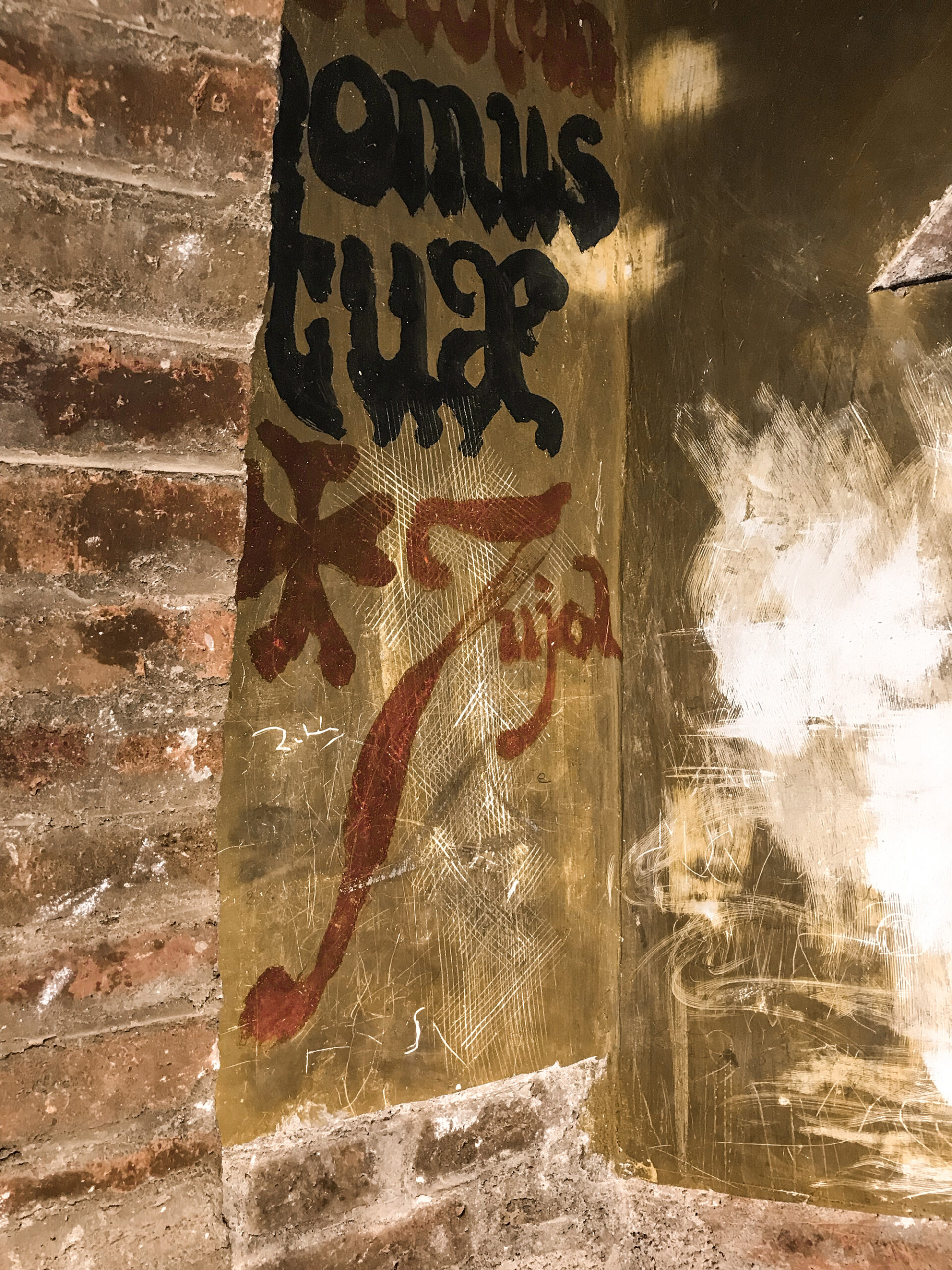
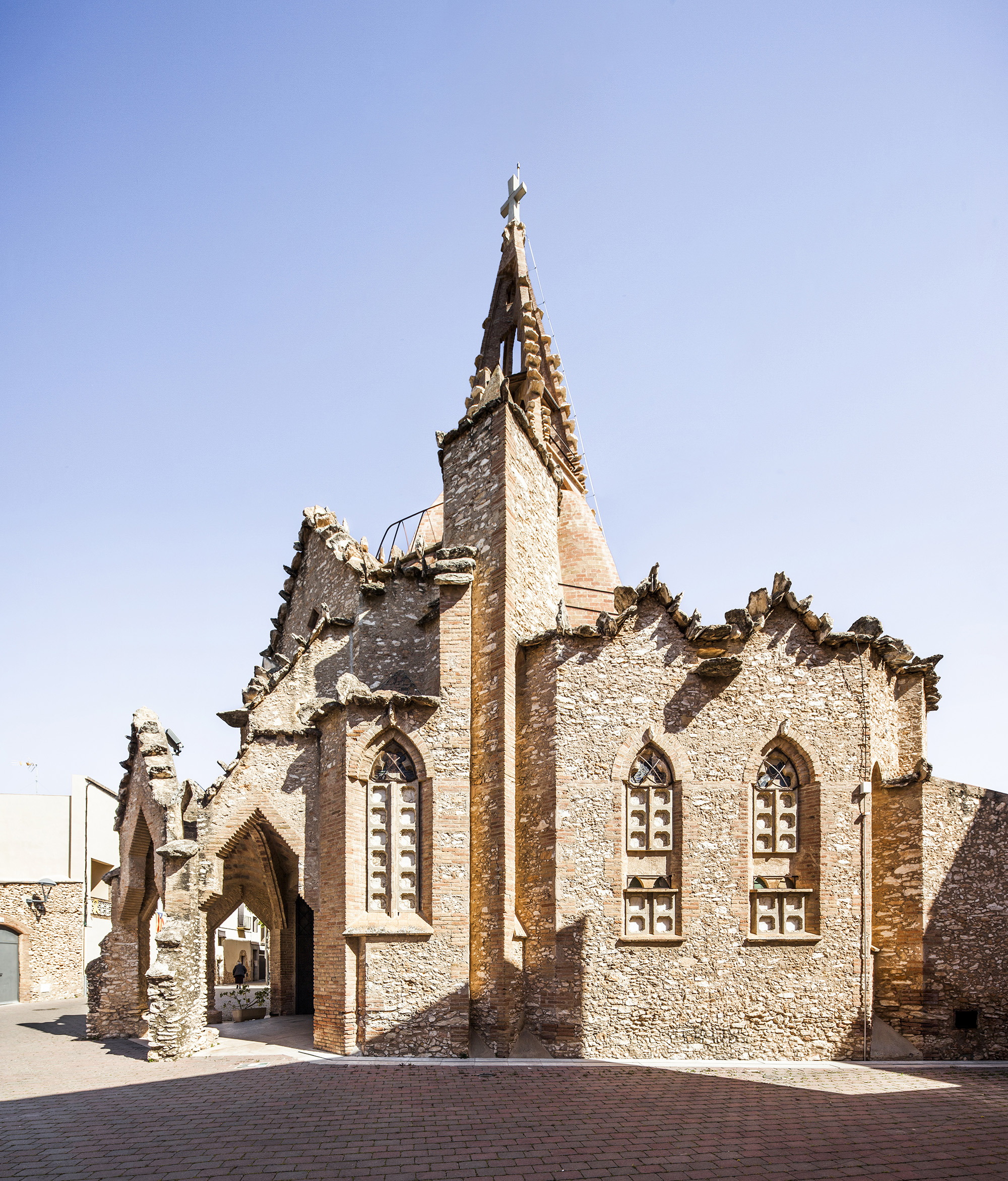
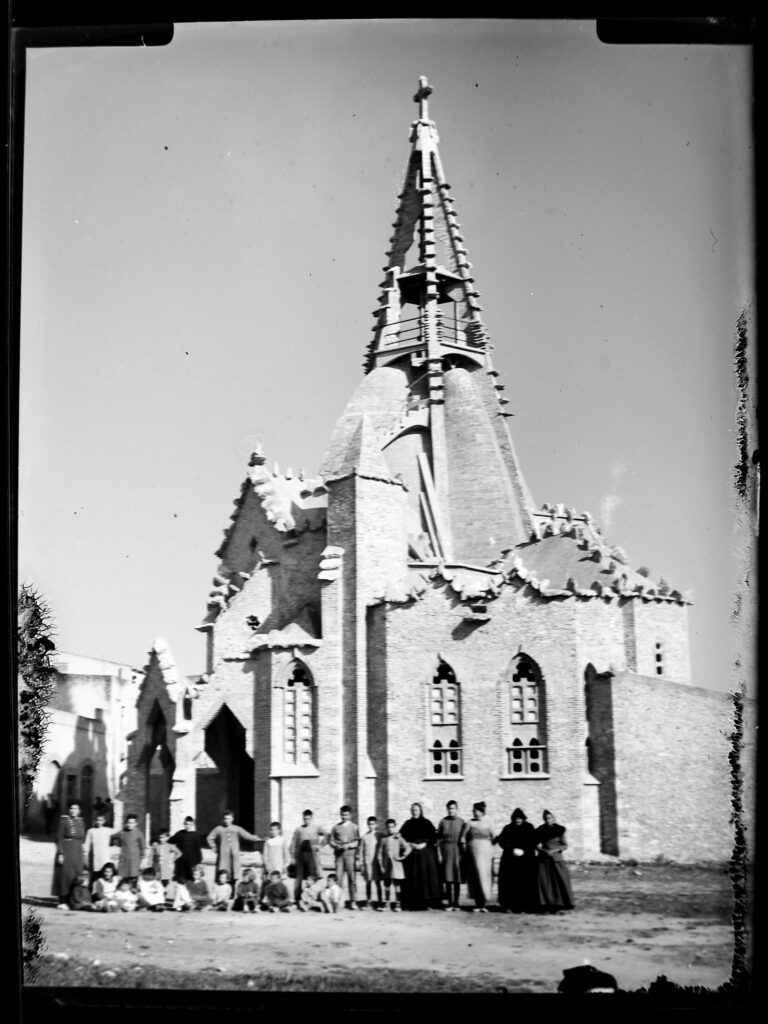
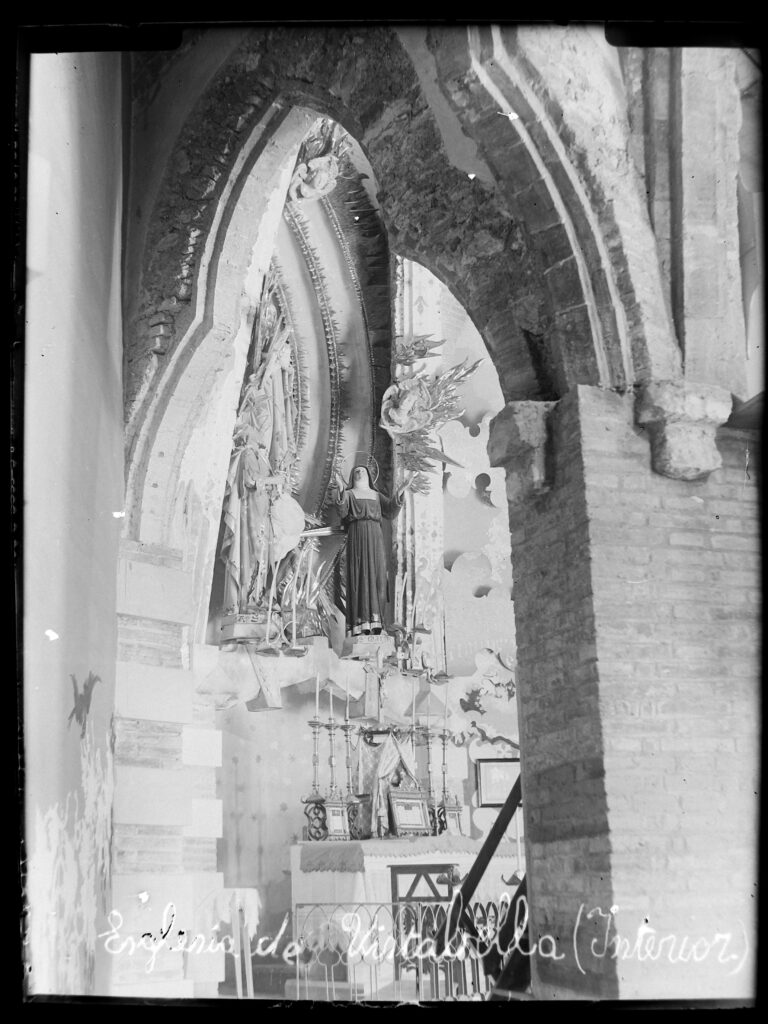
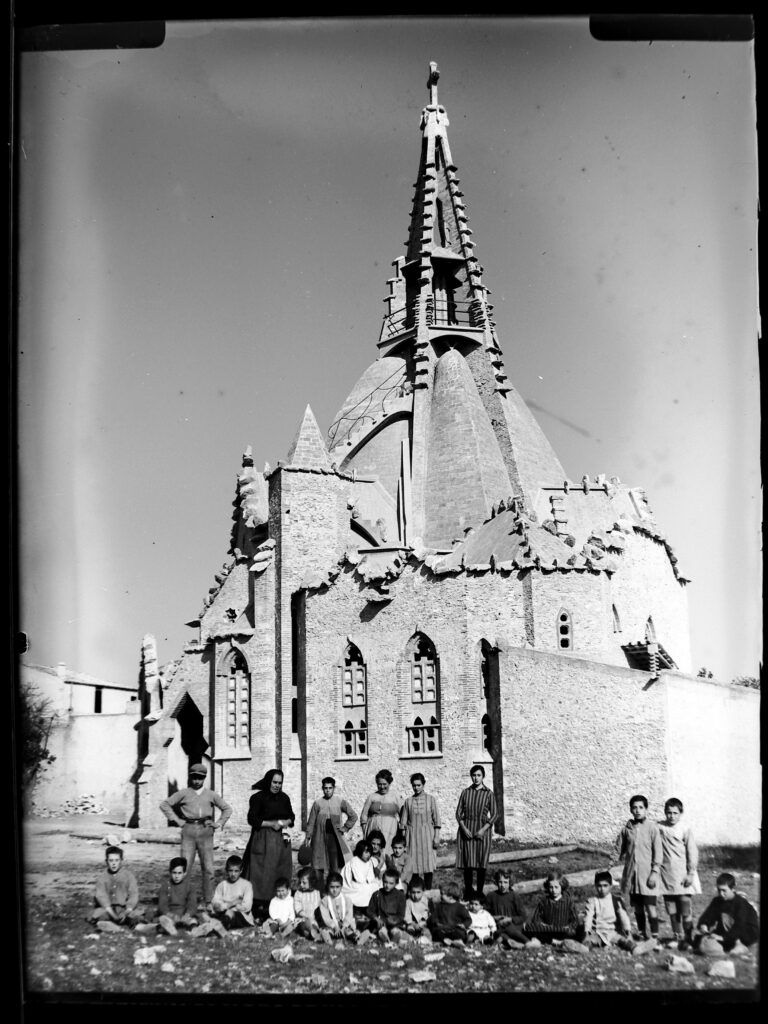
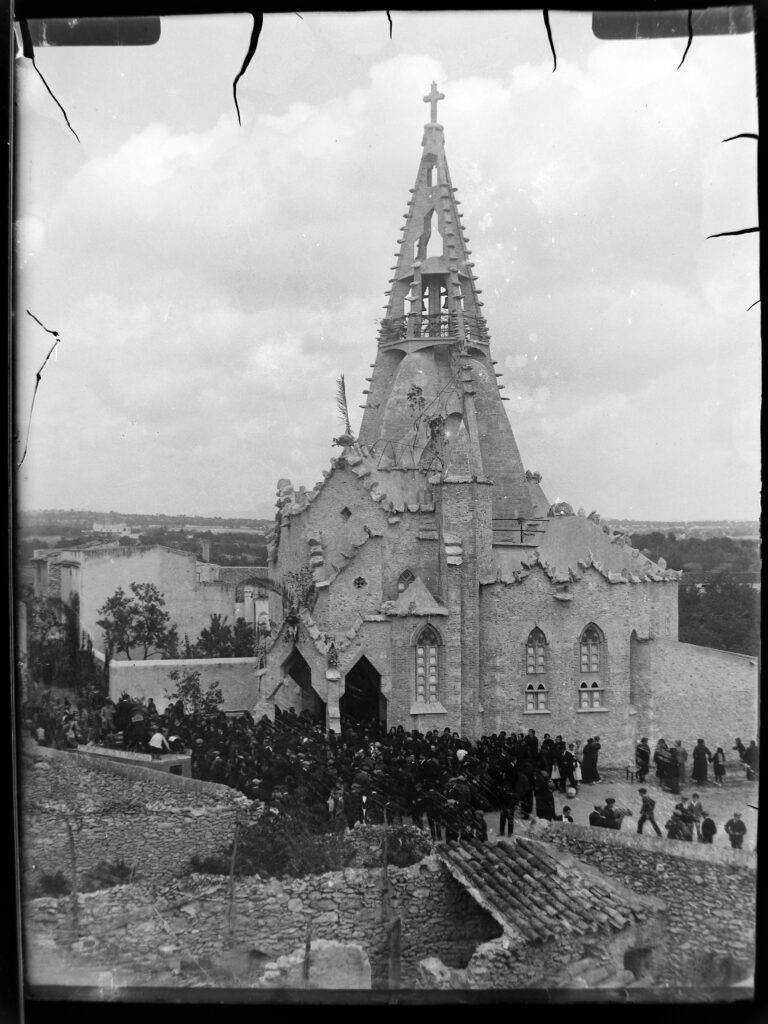
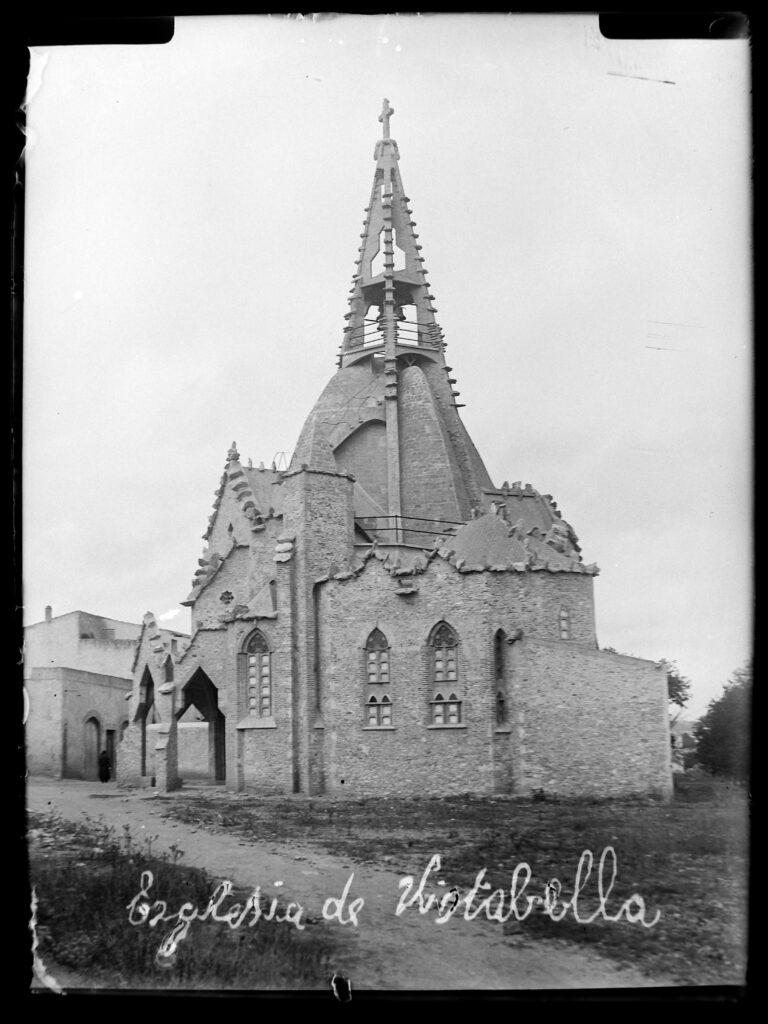
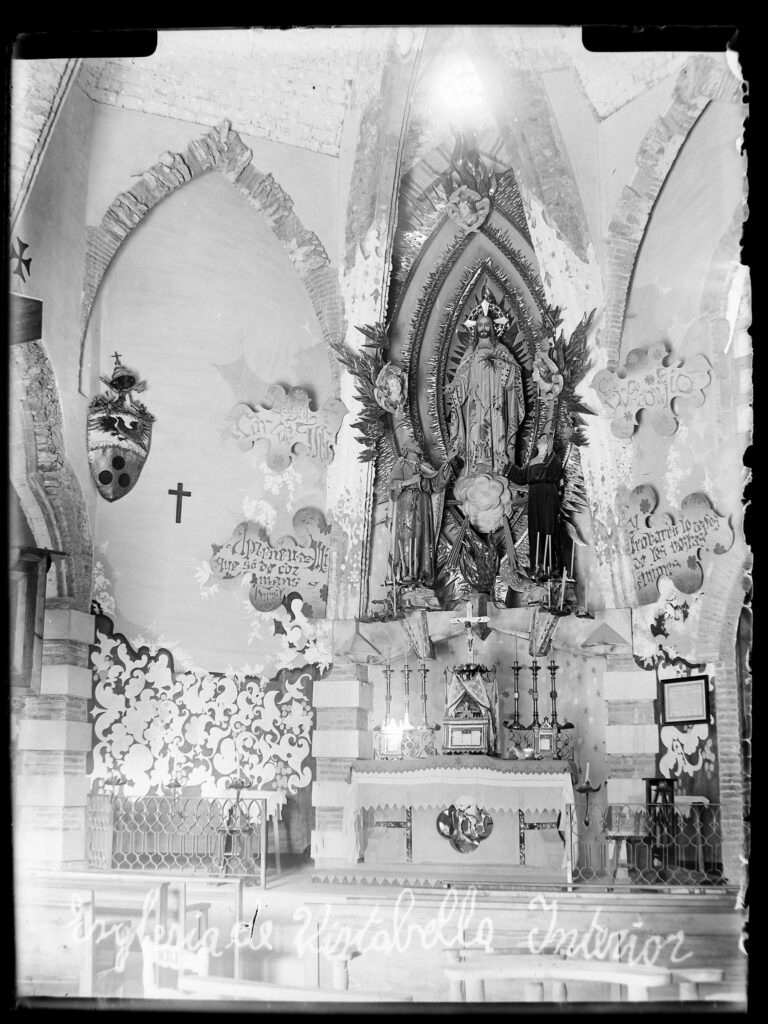
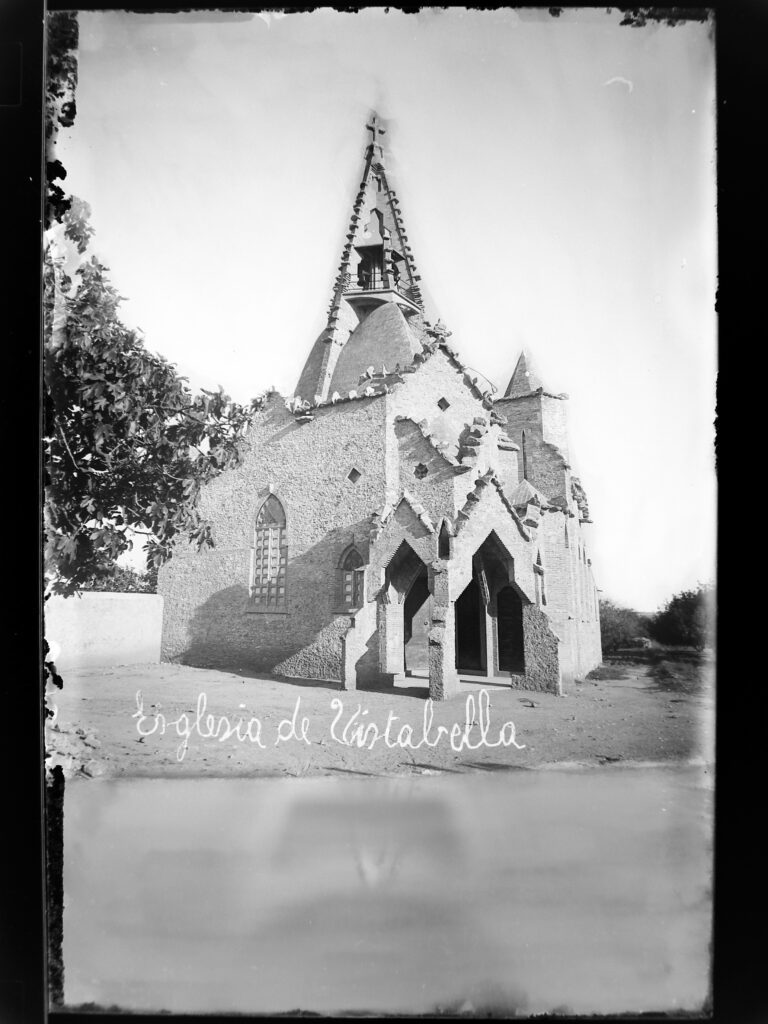
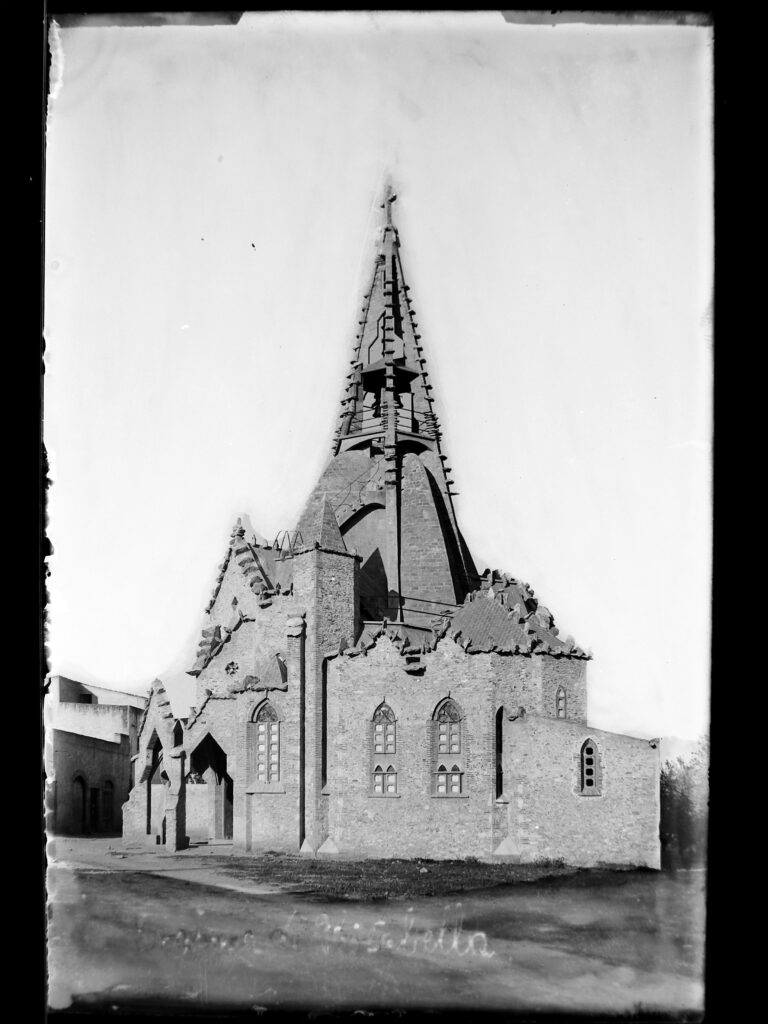
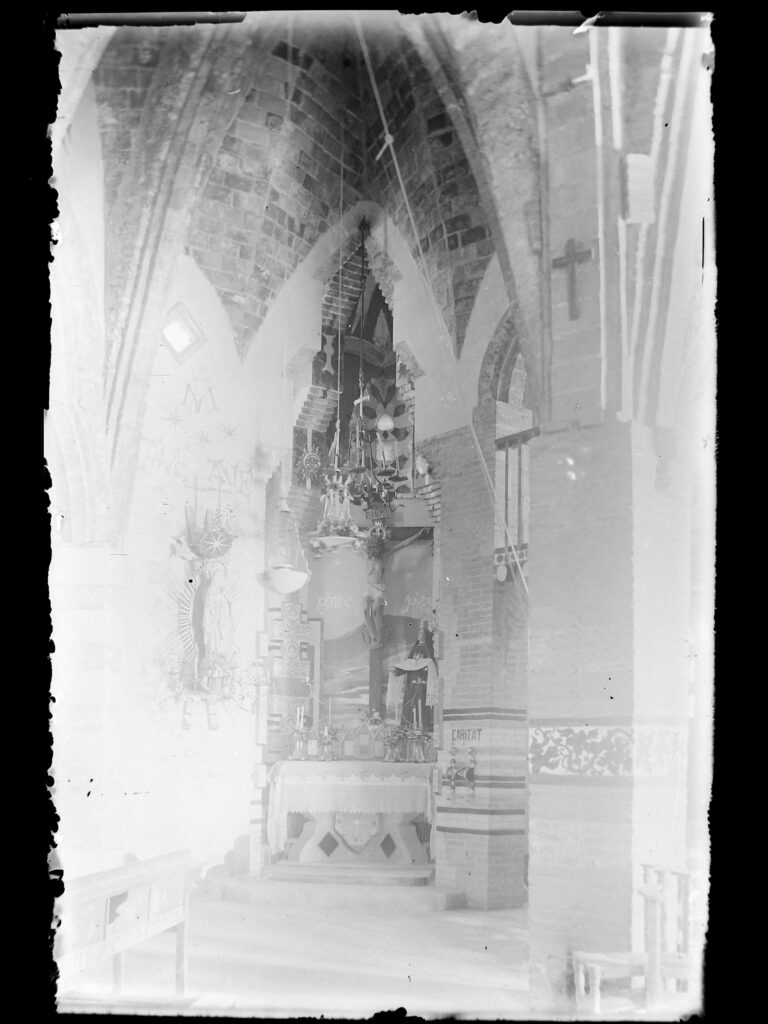
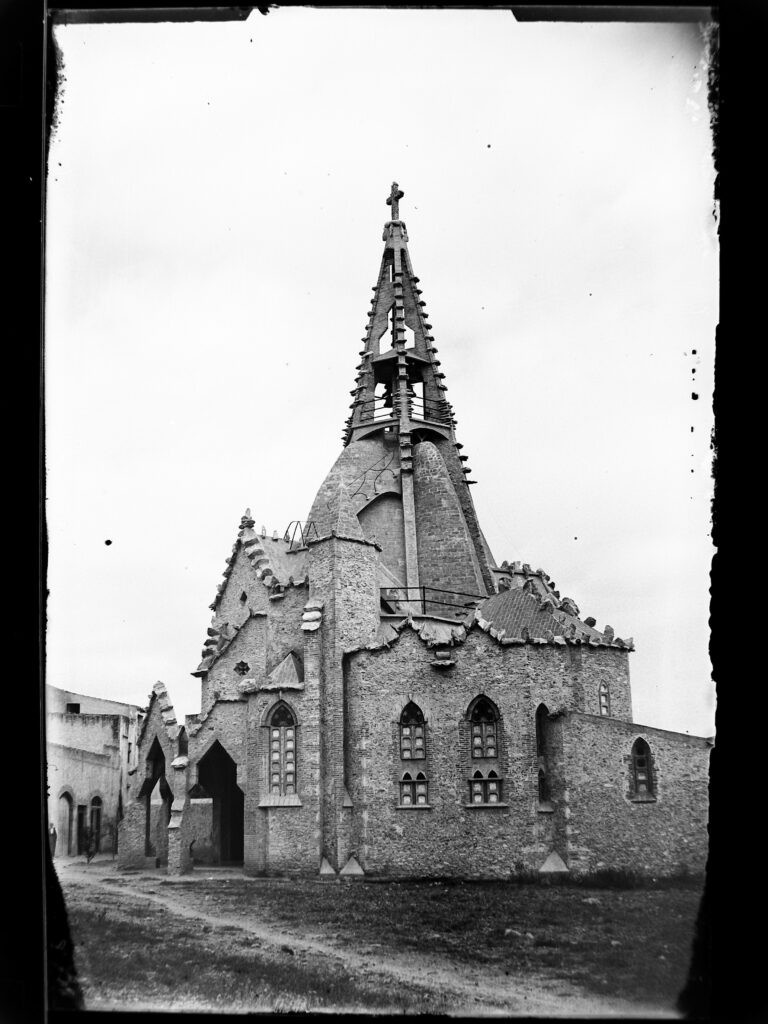
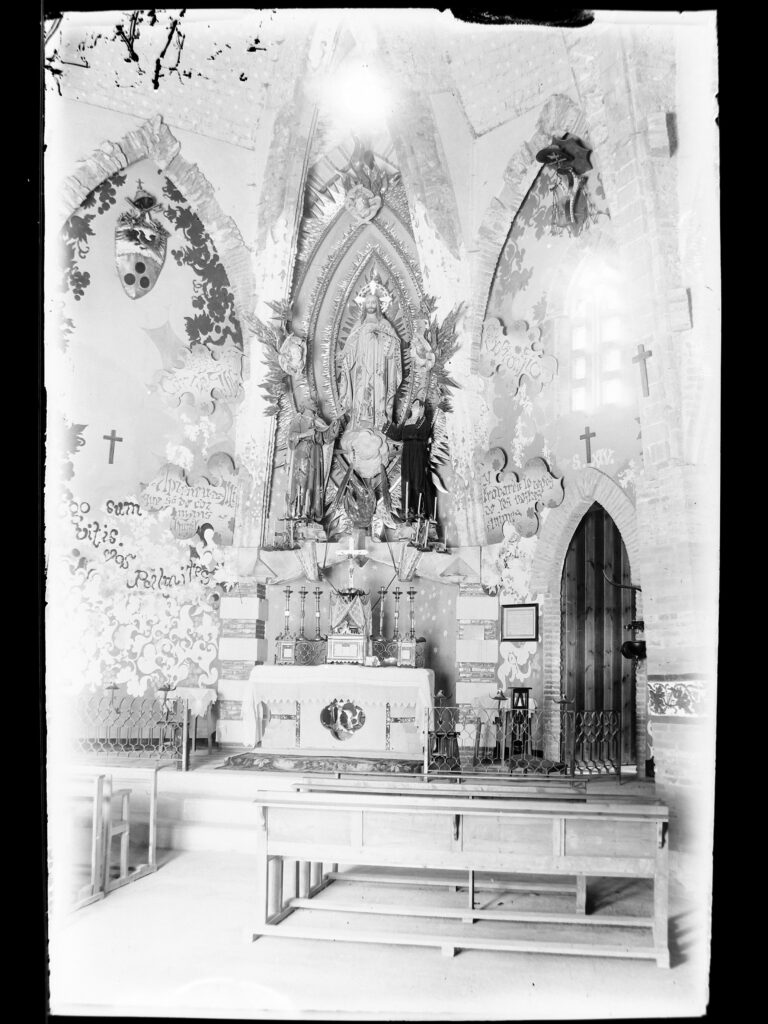
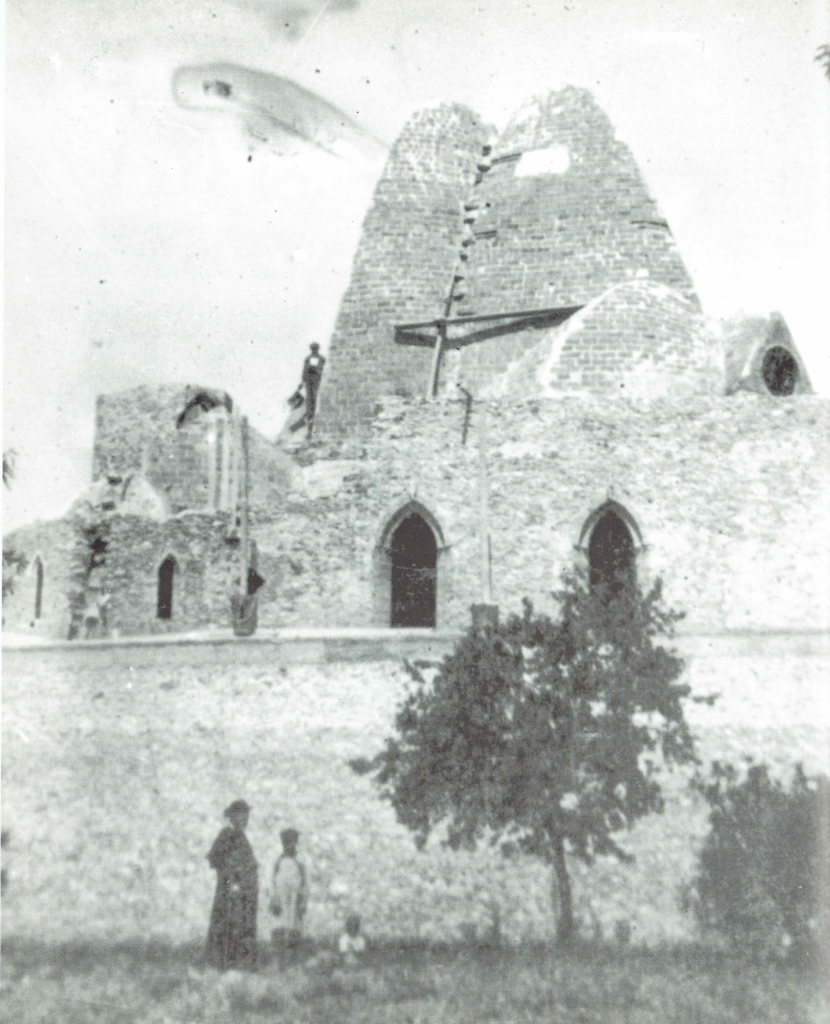
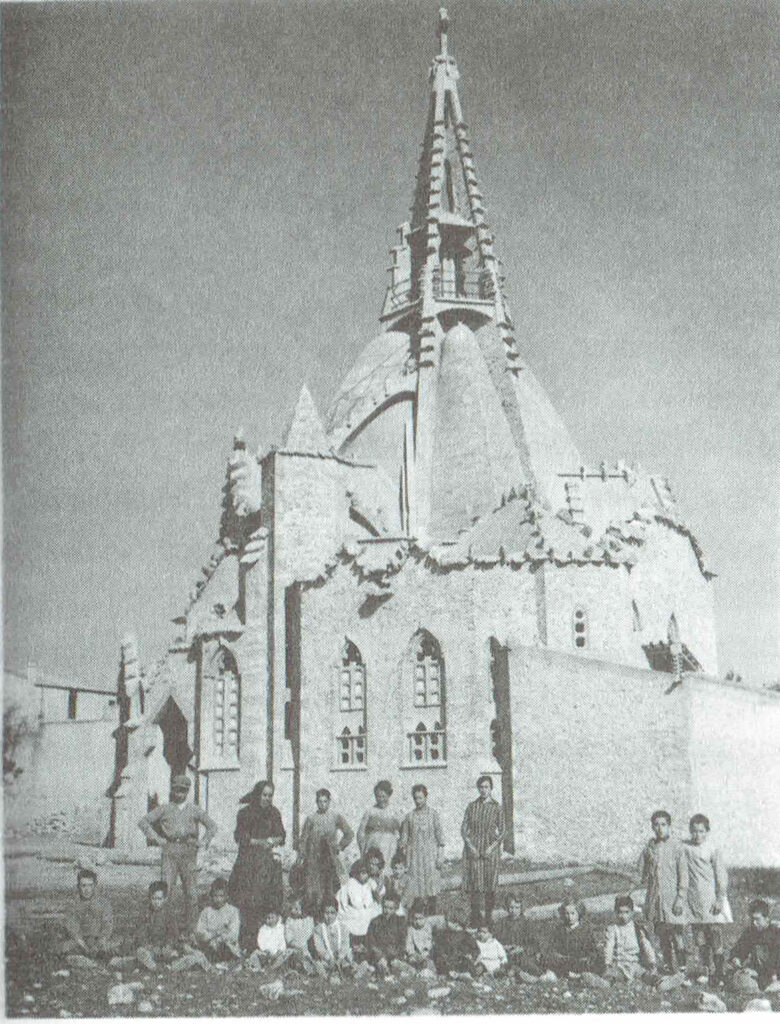
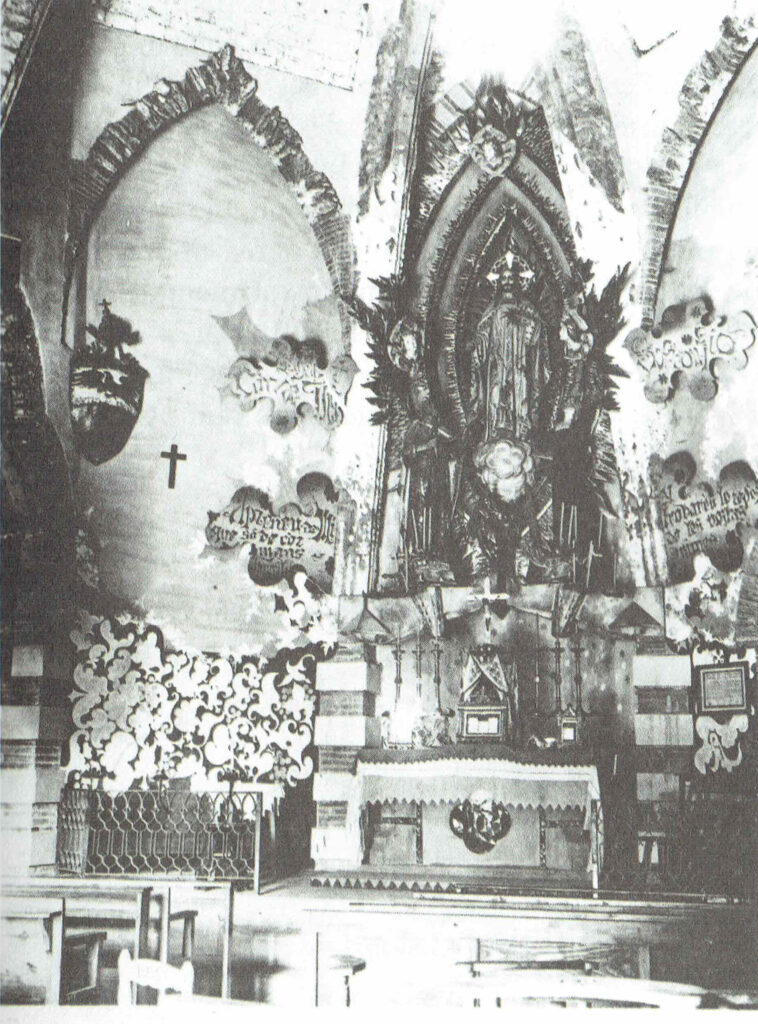
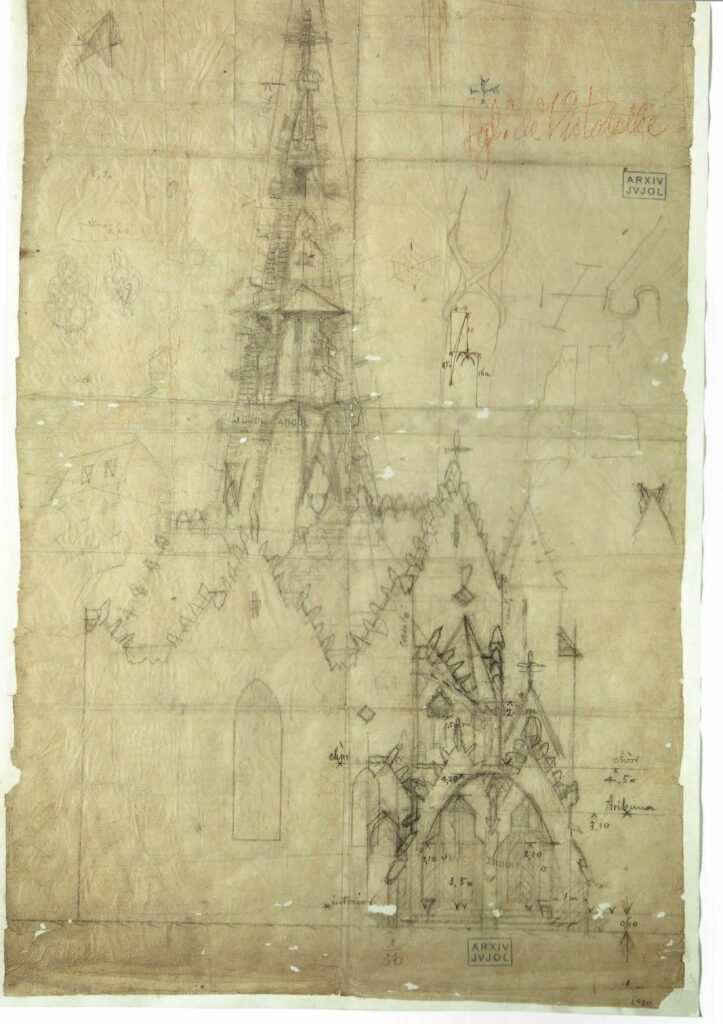
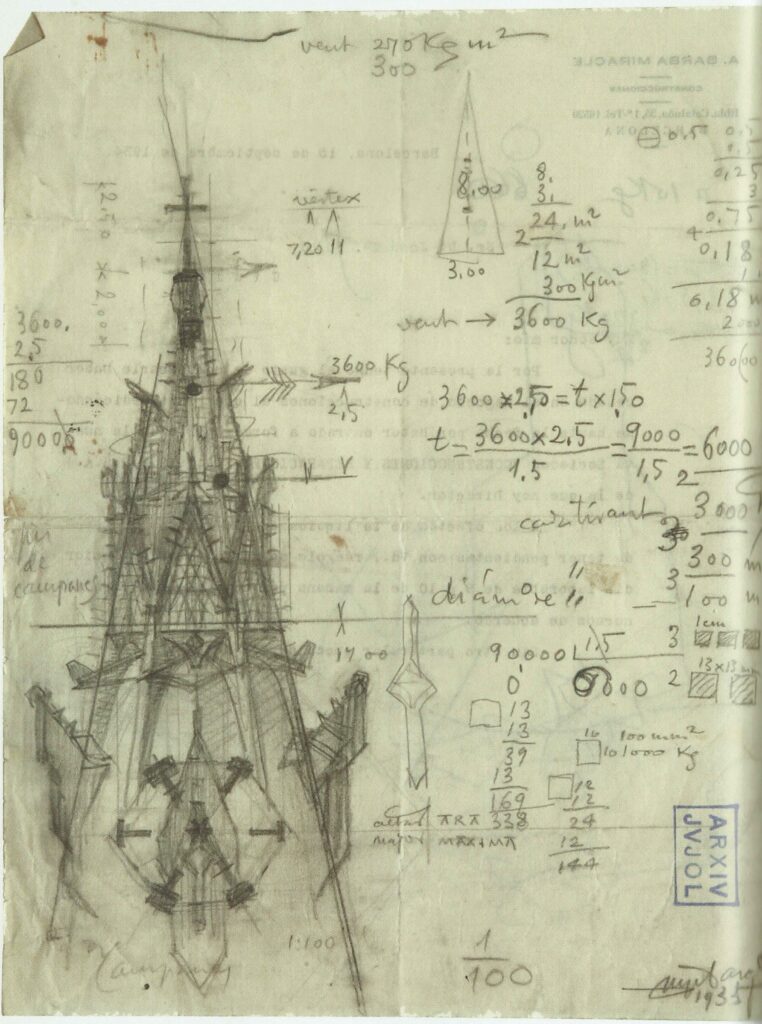
The church of Vistabella rises in the middle of the horizontal landscape that is the Camp de Tarragona. […] The church, on the contrary, proposes the new architecture that Jujol creates, vertical — pointing to the sky — which arises from the movement that Christians make with their hand over their body upon entering the church, which is the cross. To look at the church of Vistabella is to make the sign of the cross. […]
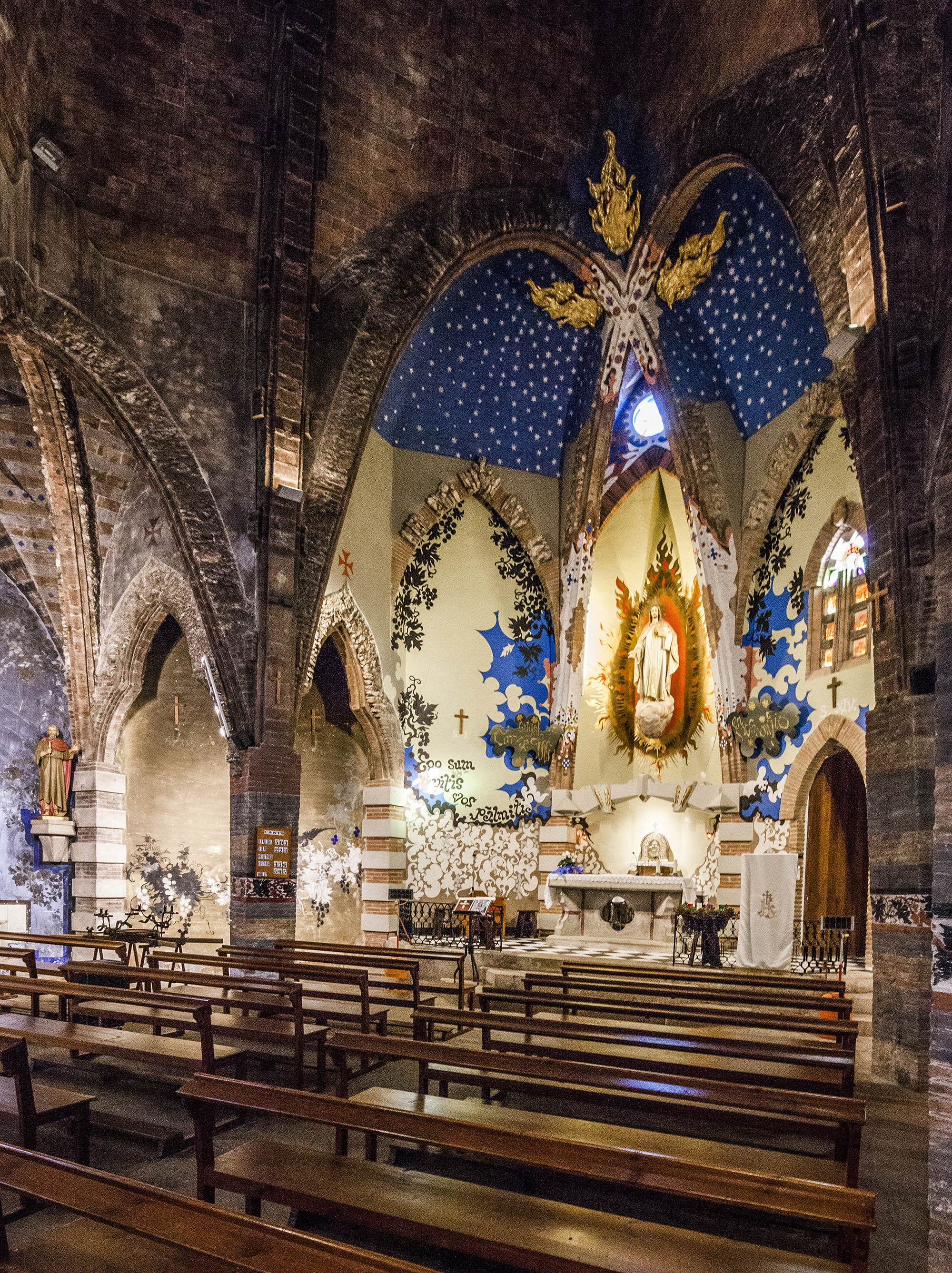
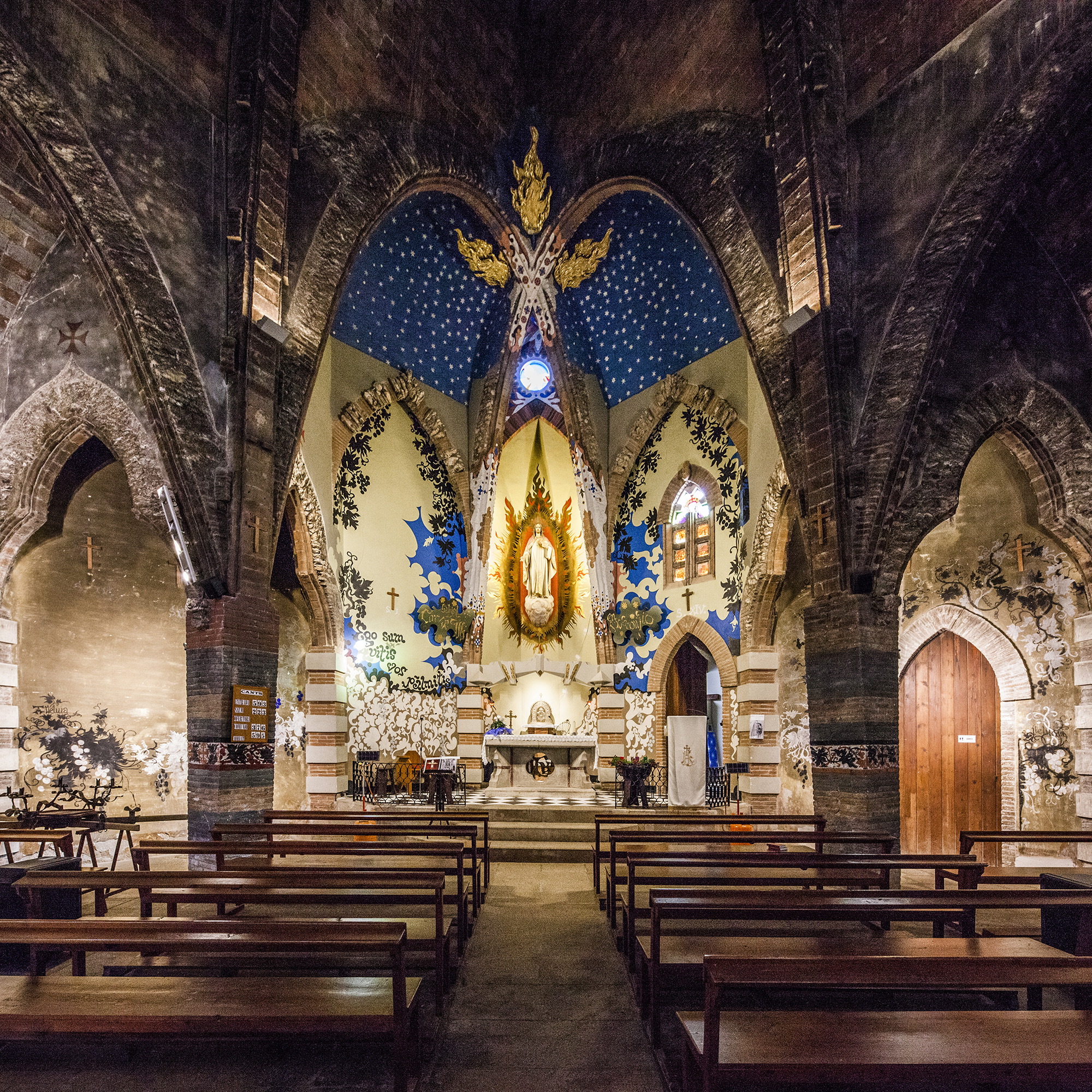
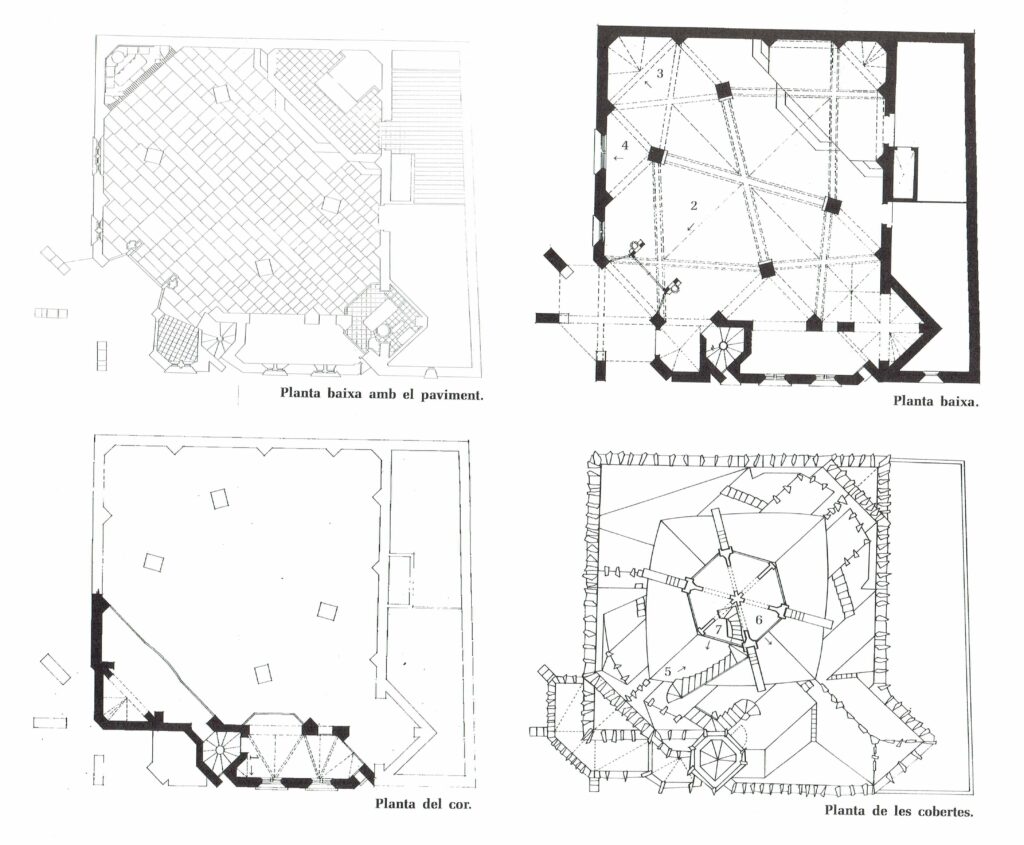
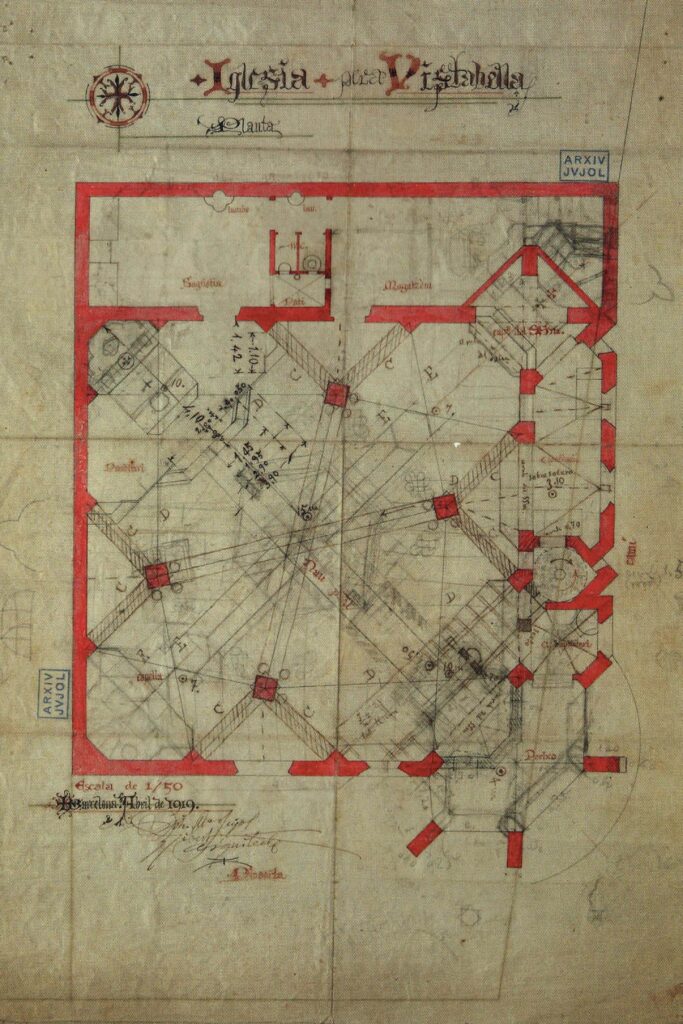
The plot offered to Jujol to build the church is not square, so the decision to opt for a square plan is an architectural decision. […] The first plan we have of the church is set on a rectangular plot of twenty-one by sixteen metres, of which only a square of twelve and a half metres would be used for the church. […] Jujol, however, is determined to build a centrally planned church. The first explanation would not understand why Jujol did not take advantage of the full buildable depth.
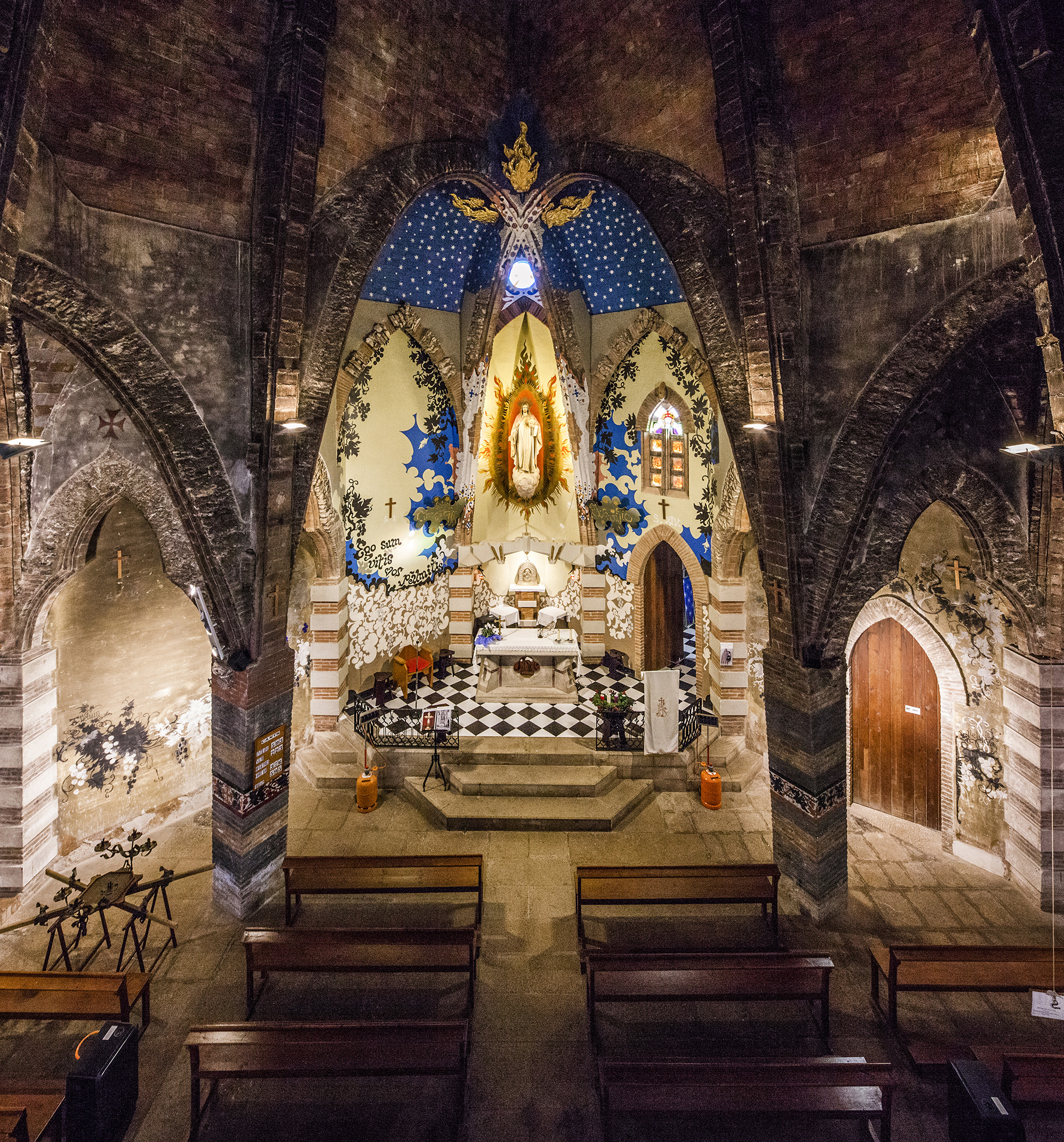
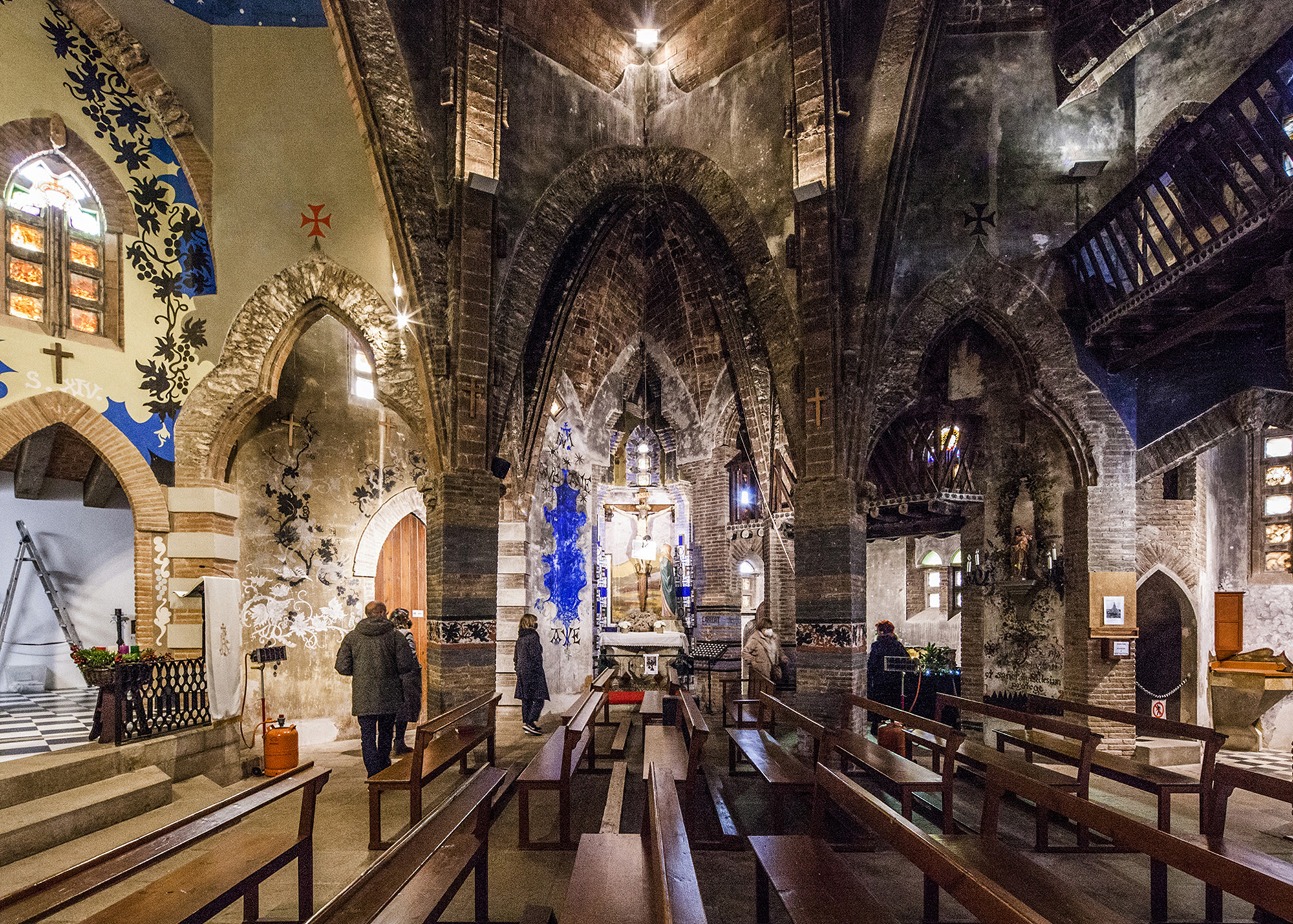
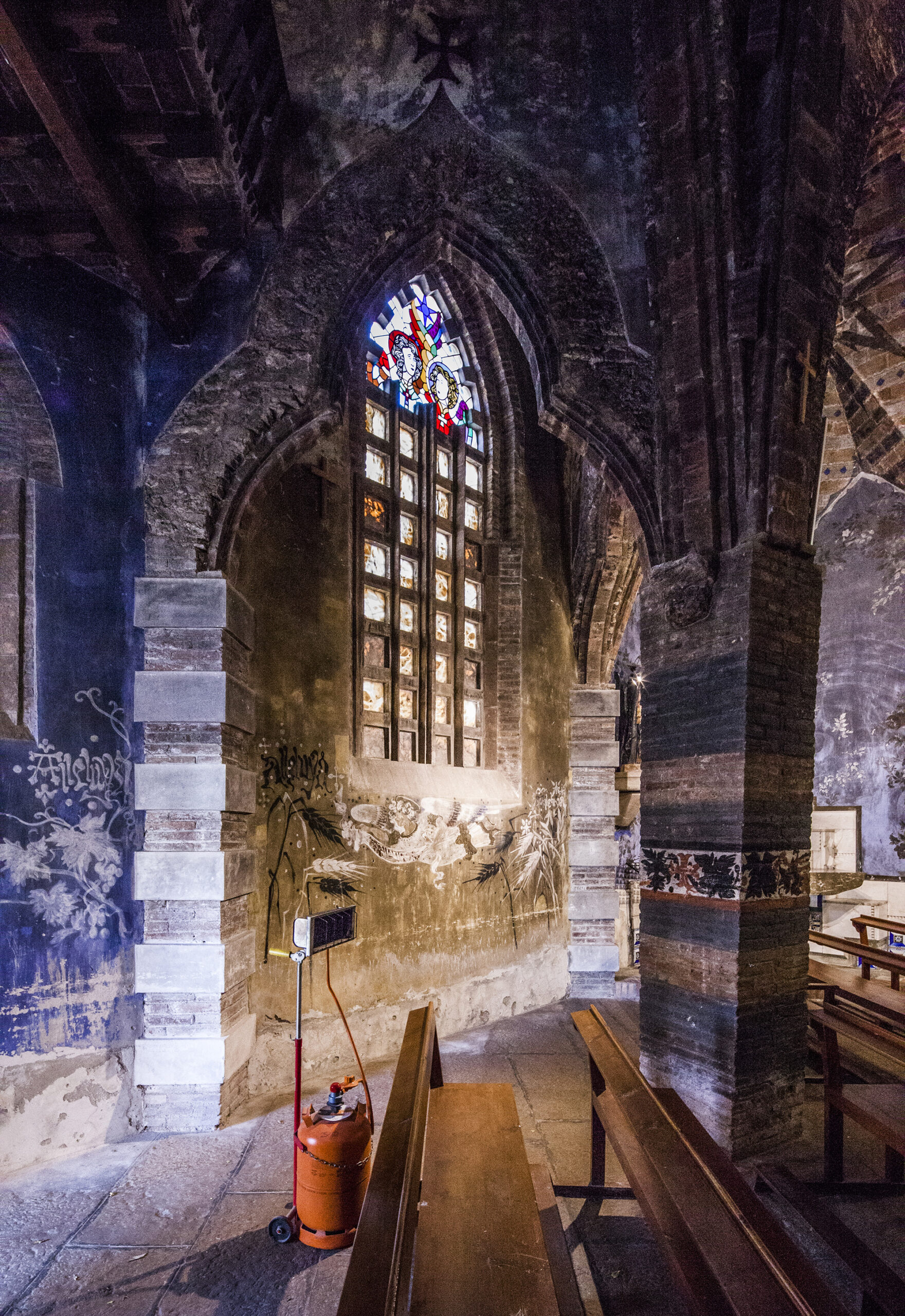
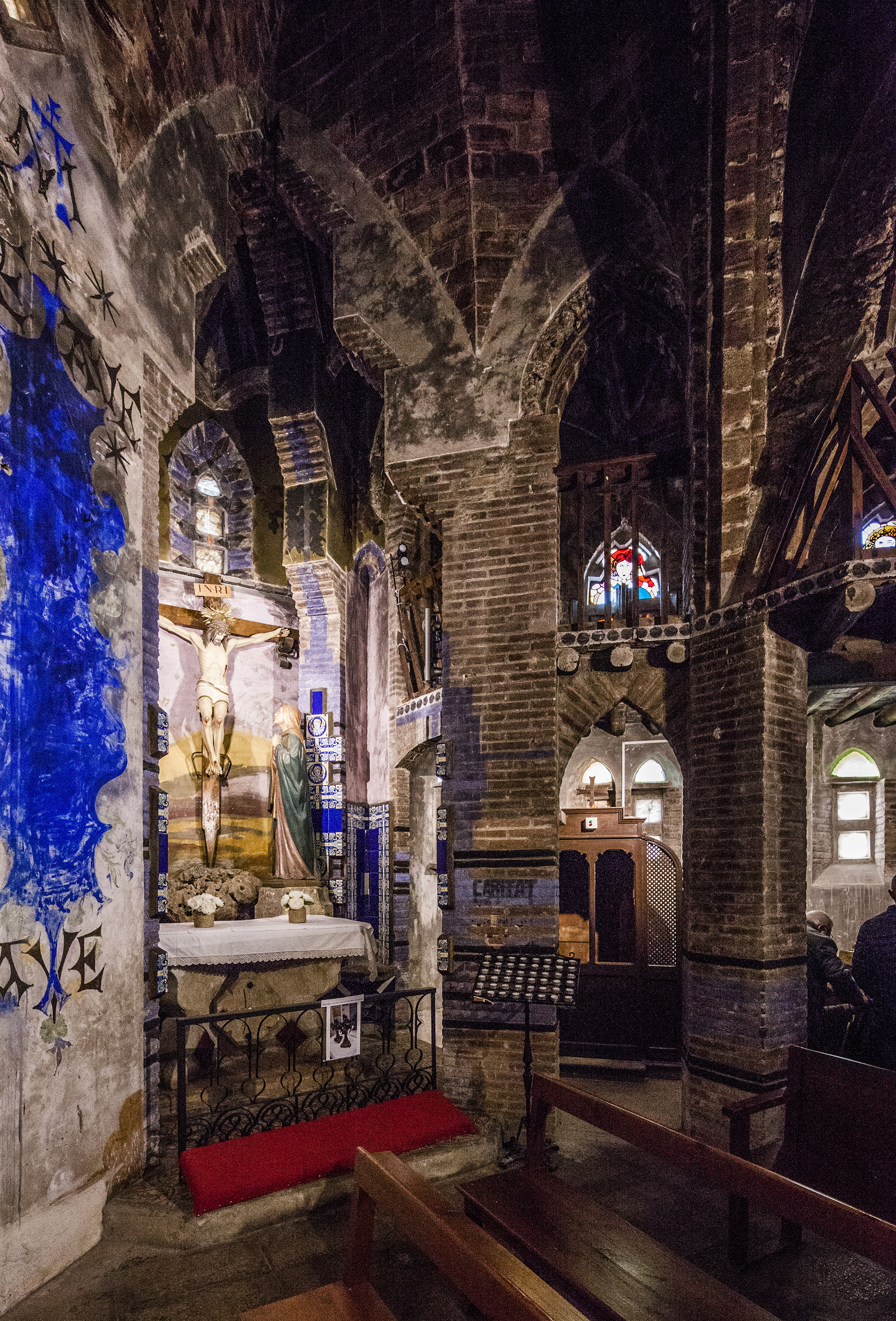
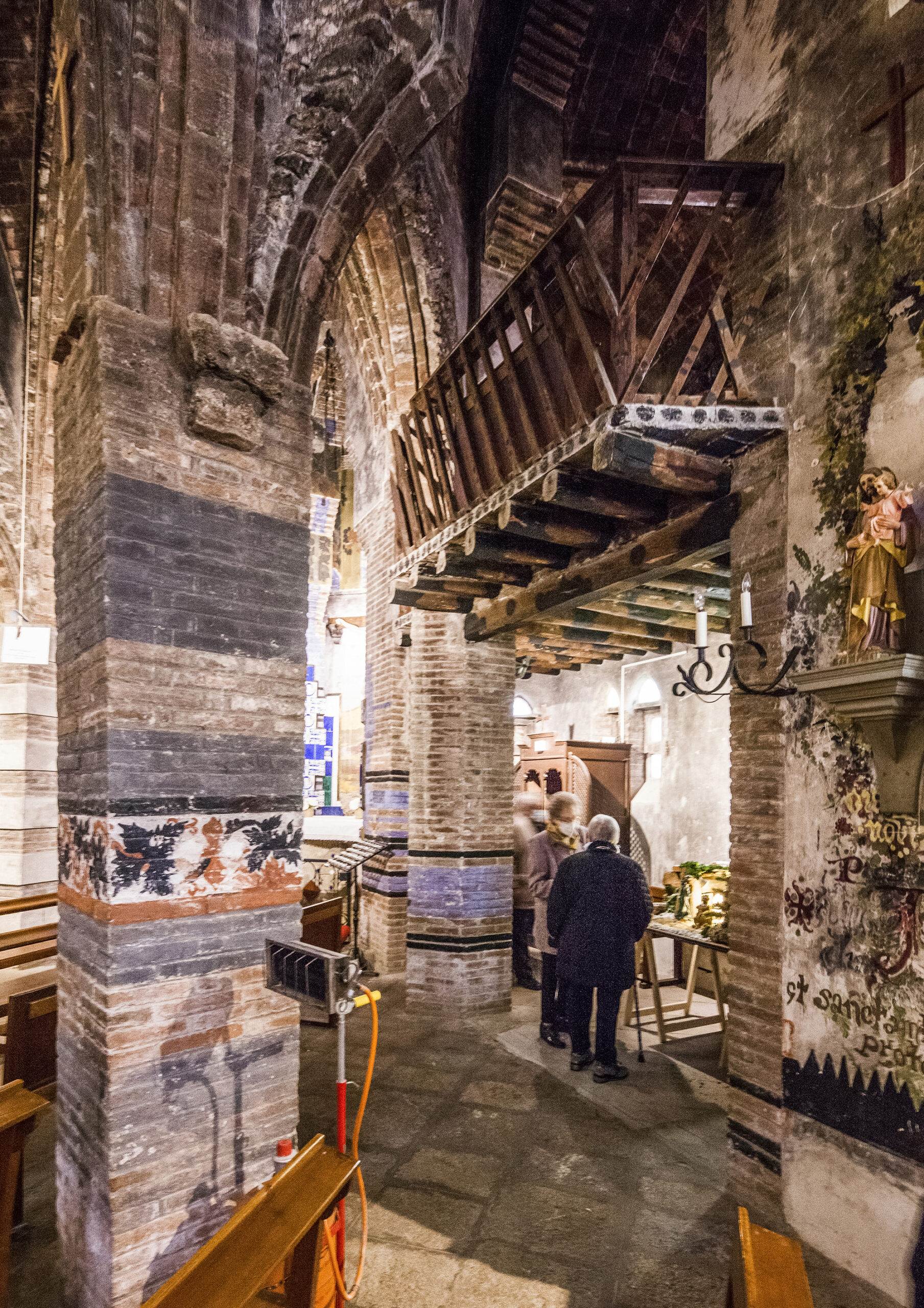
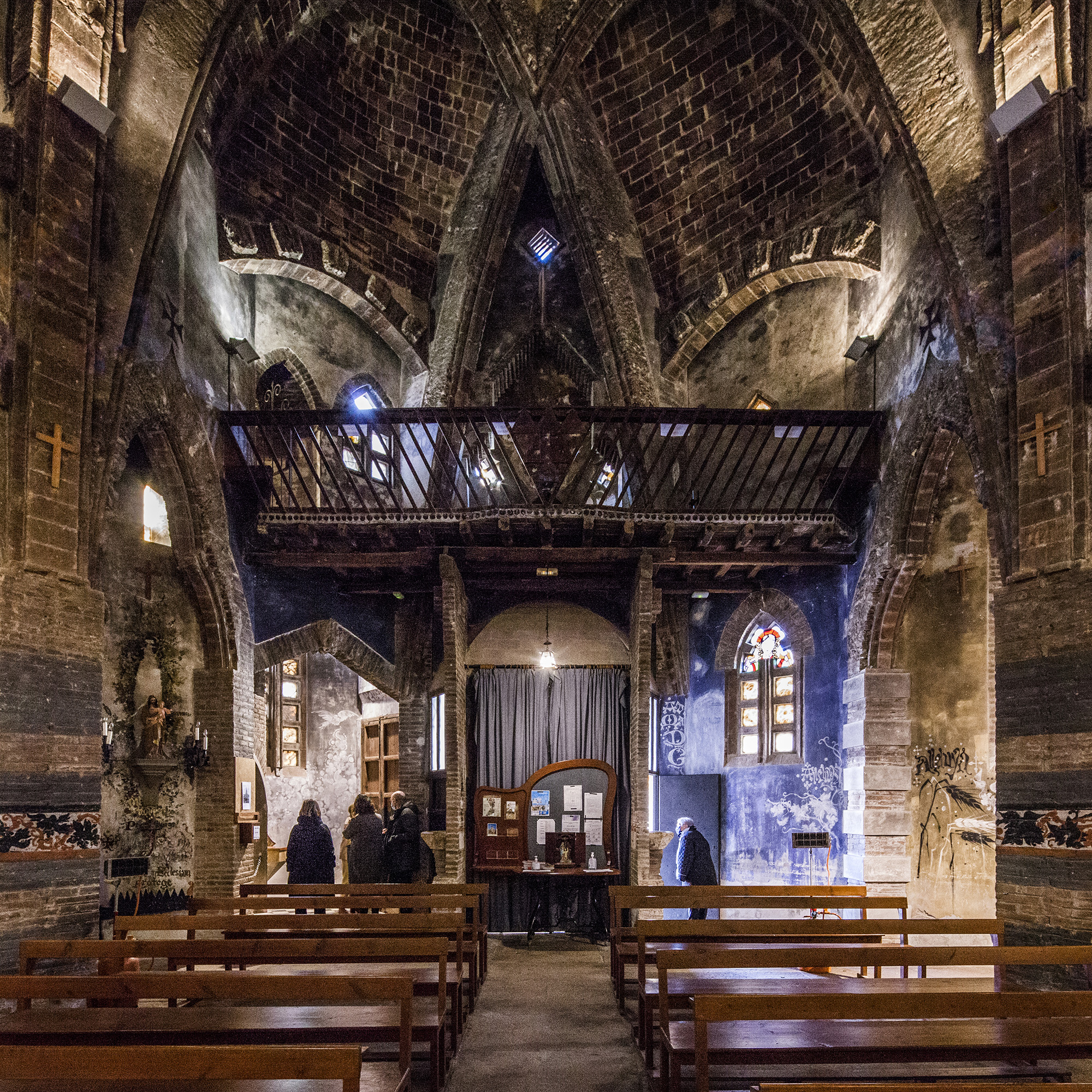
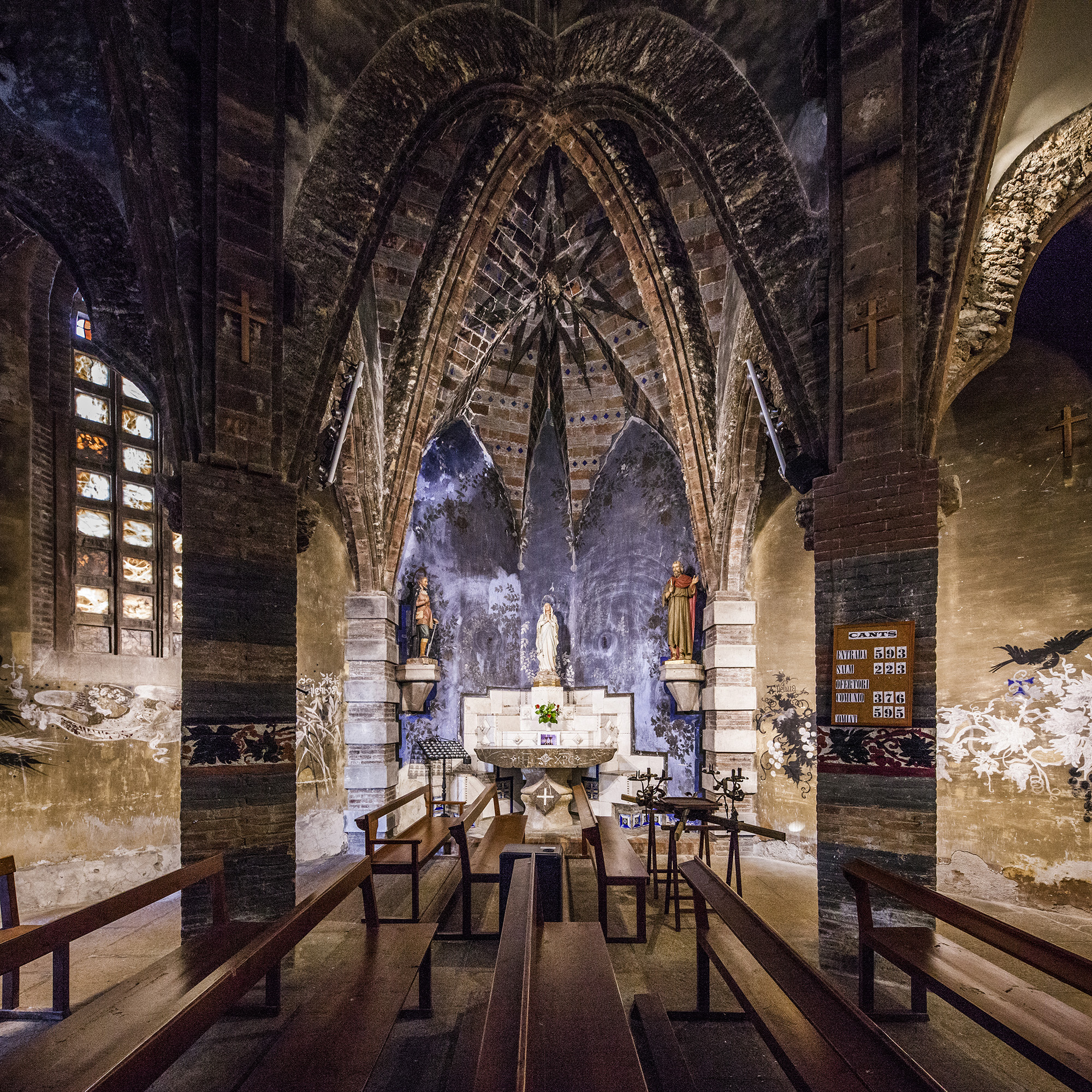
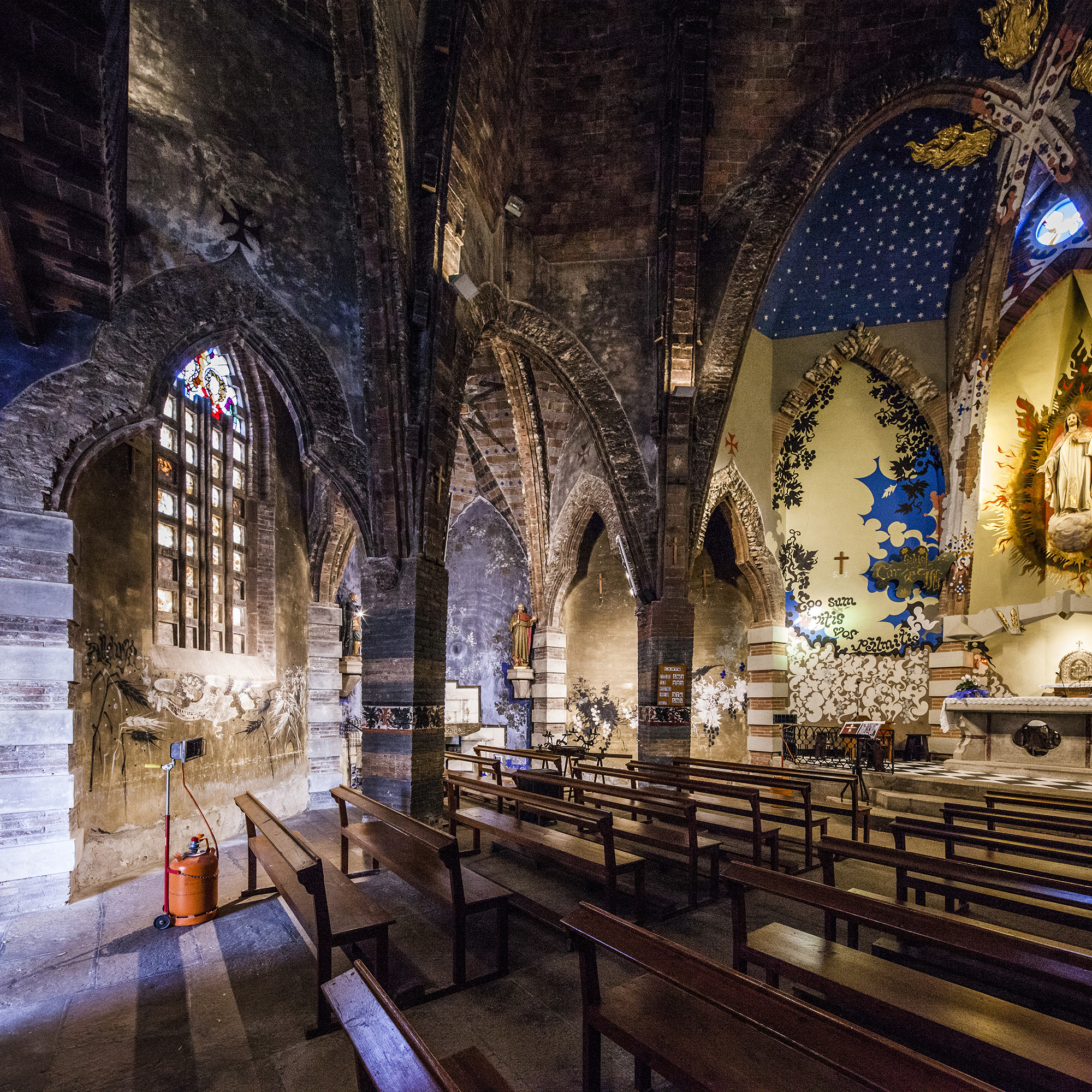
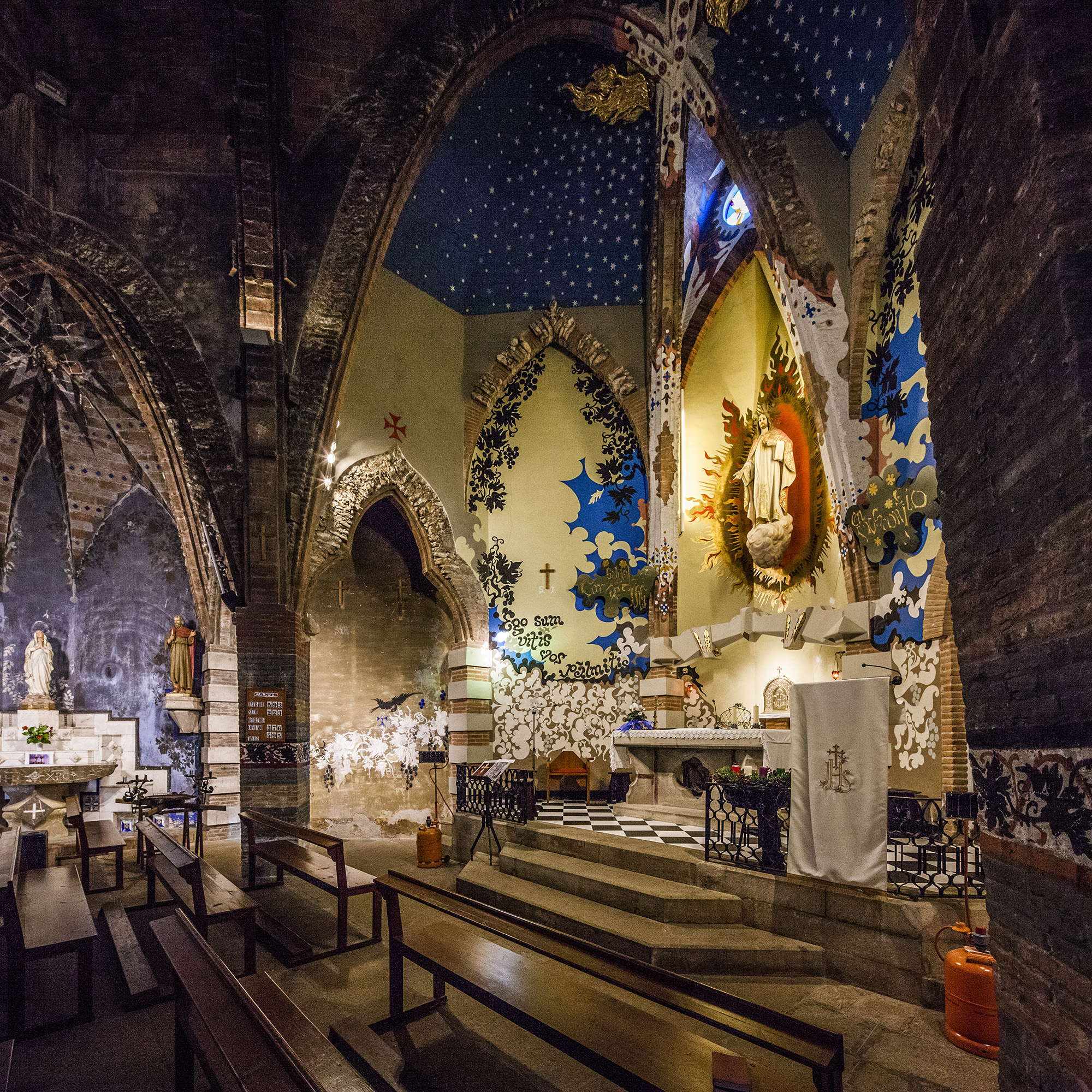
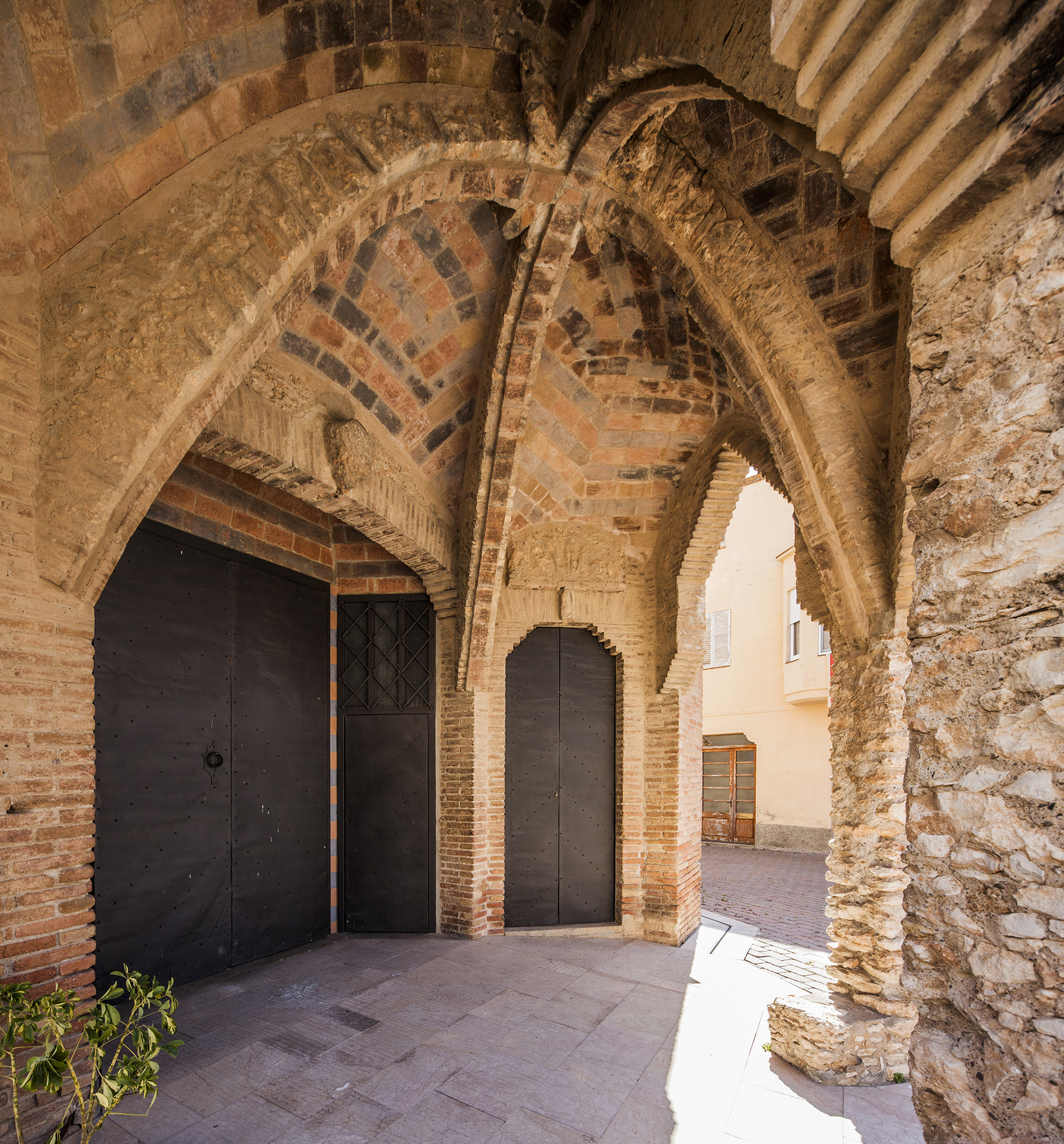
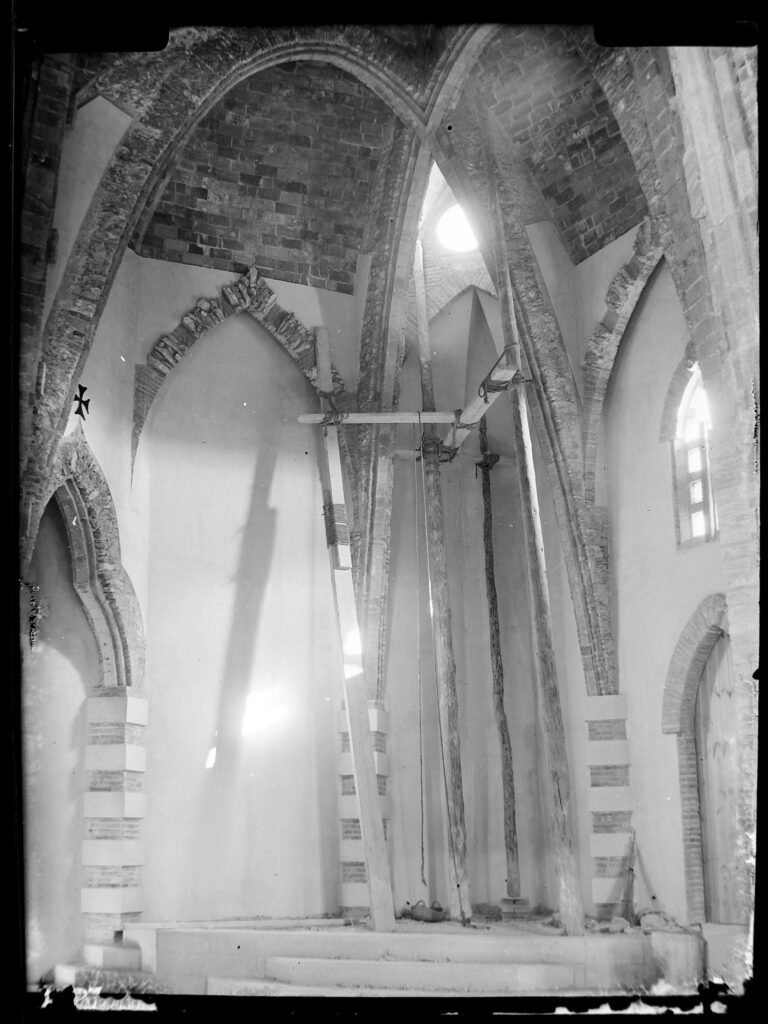
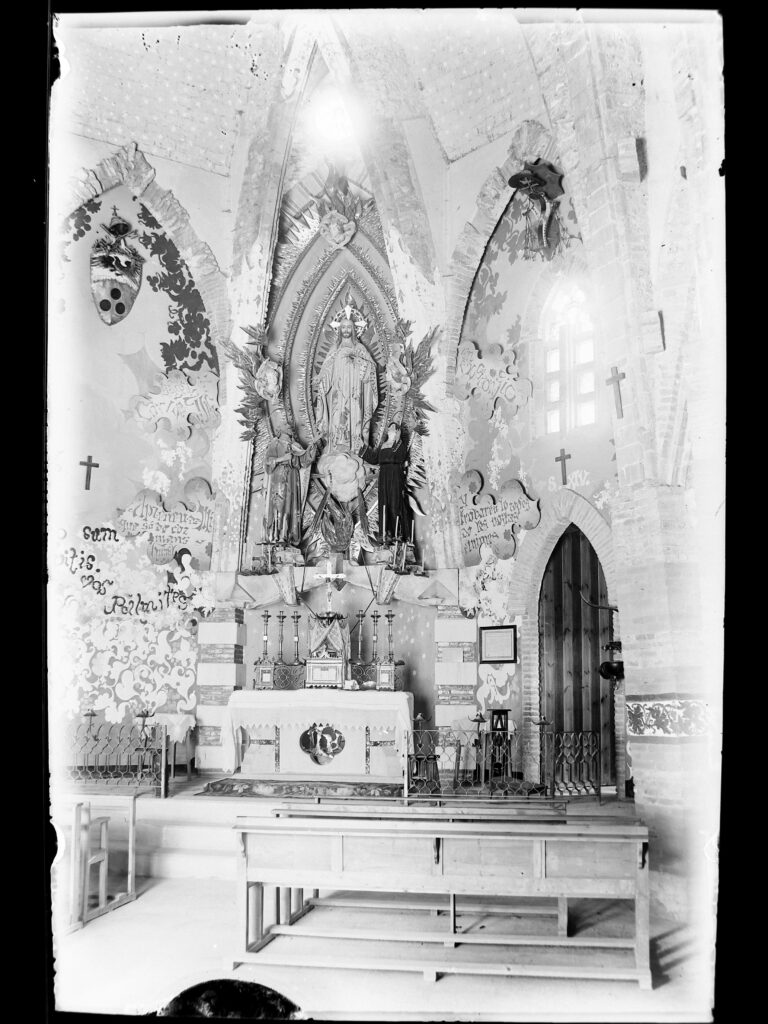
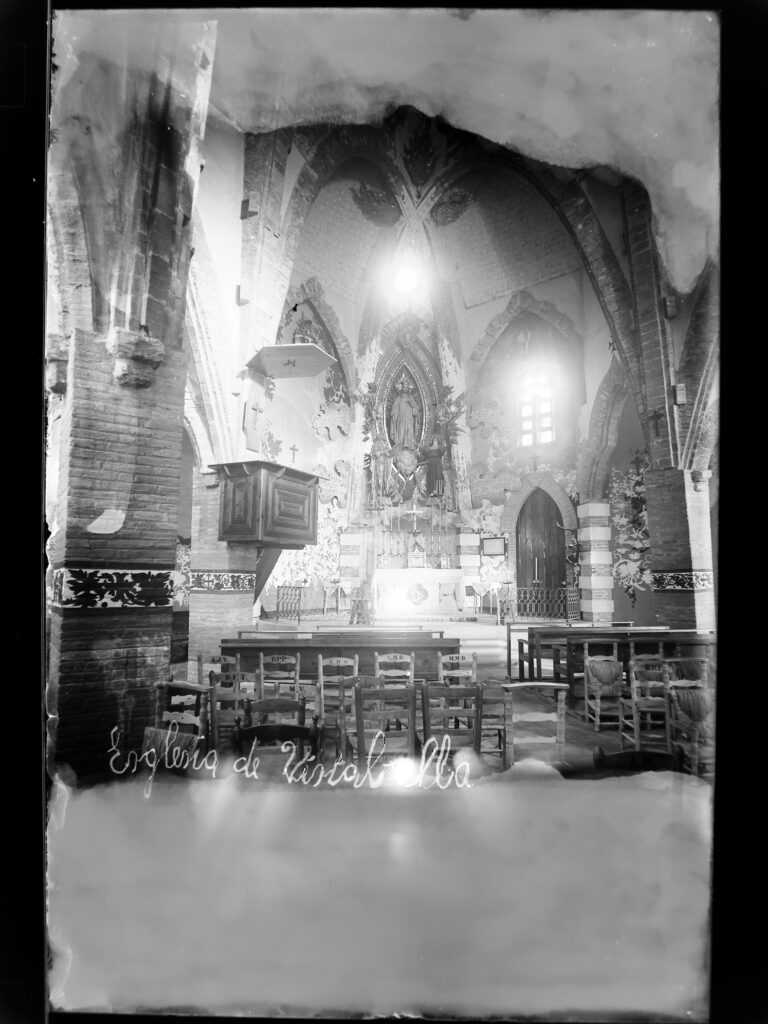
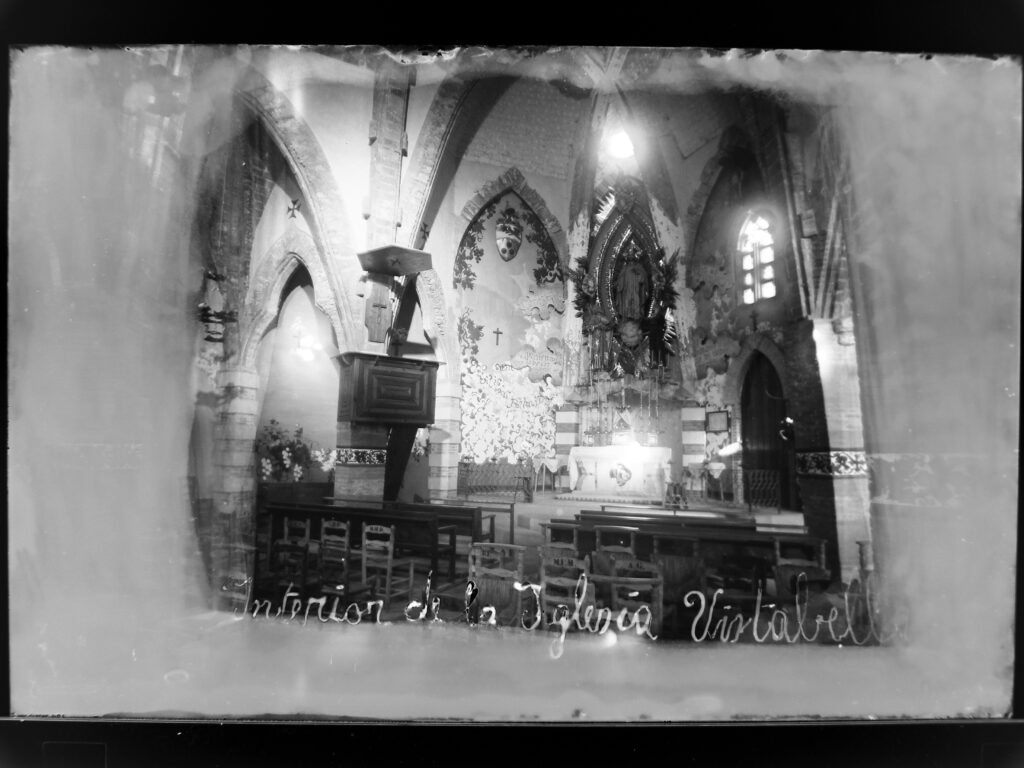
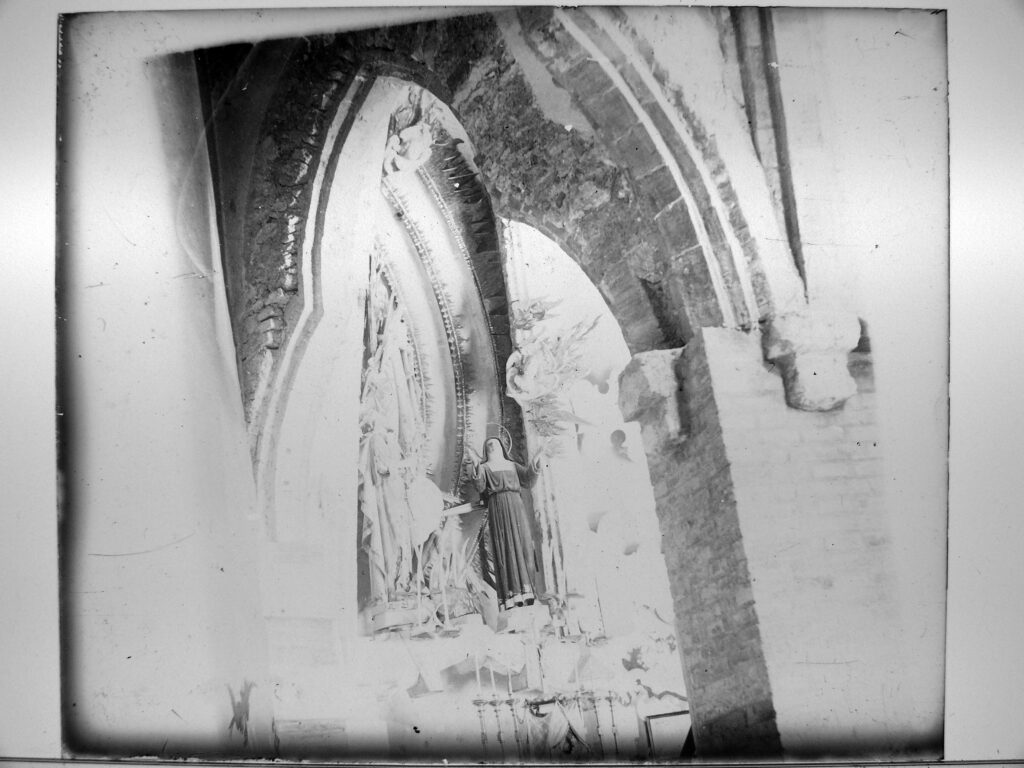
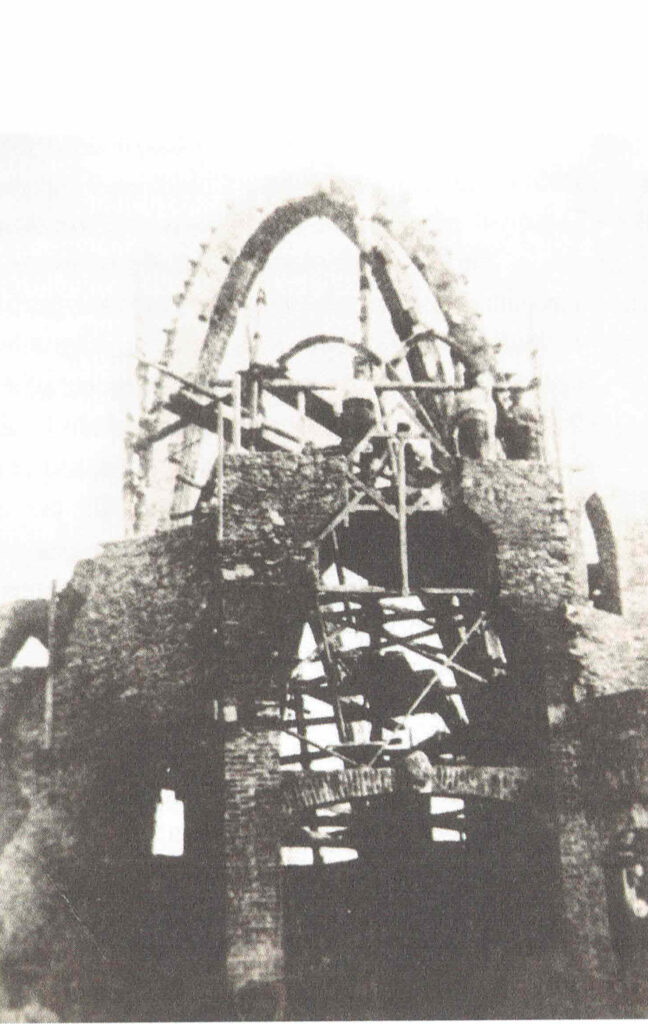
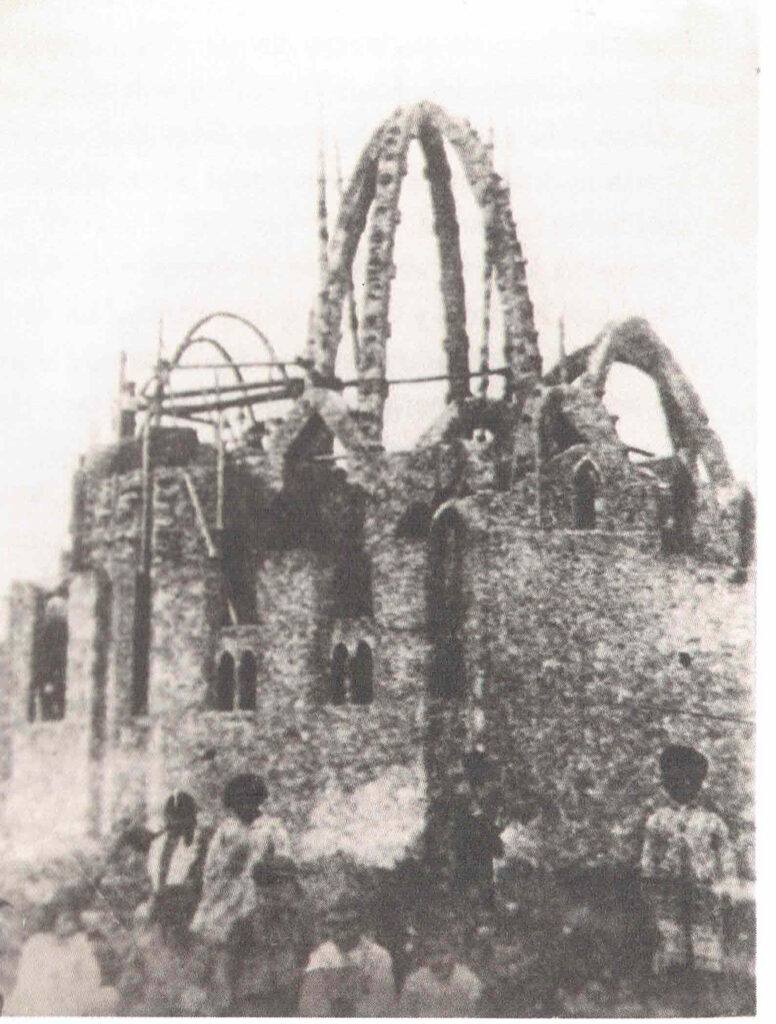
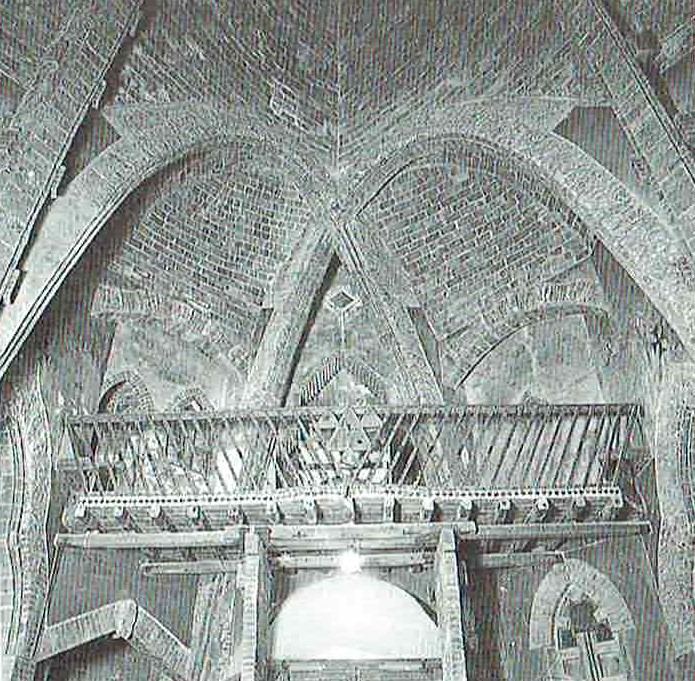
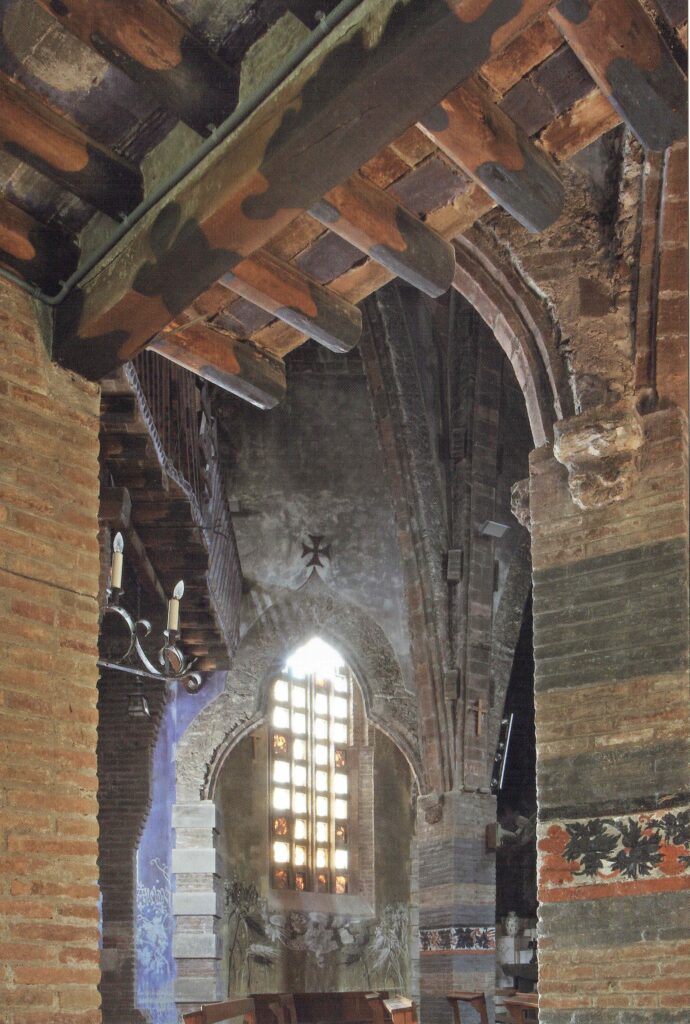
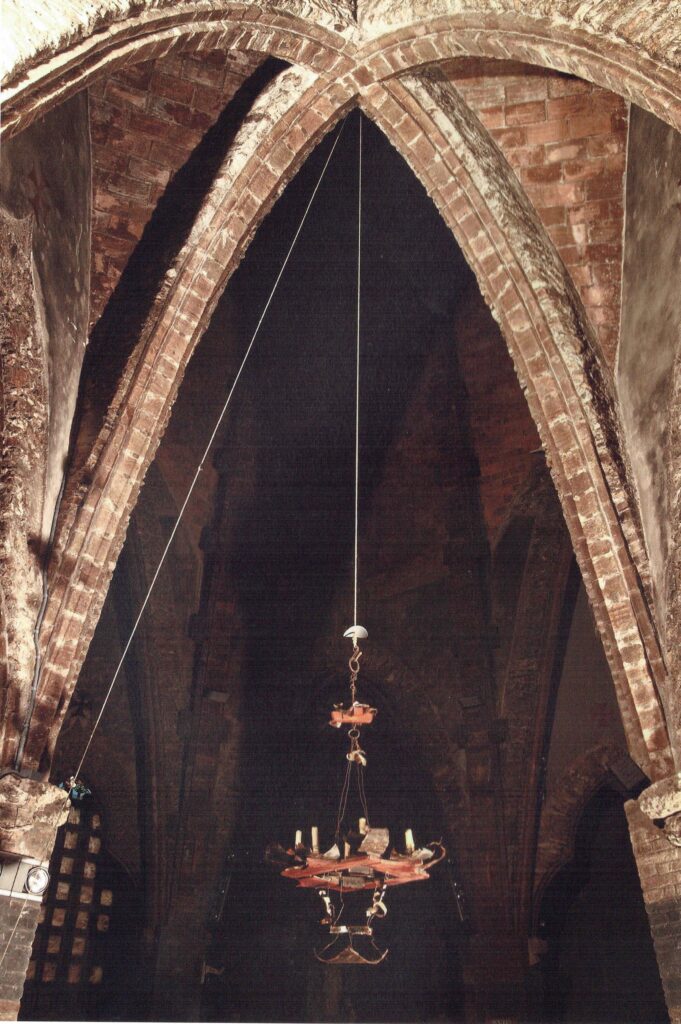
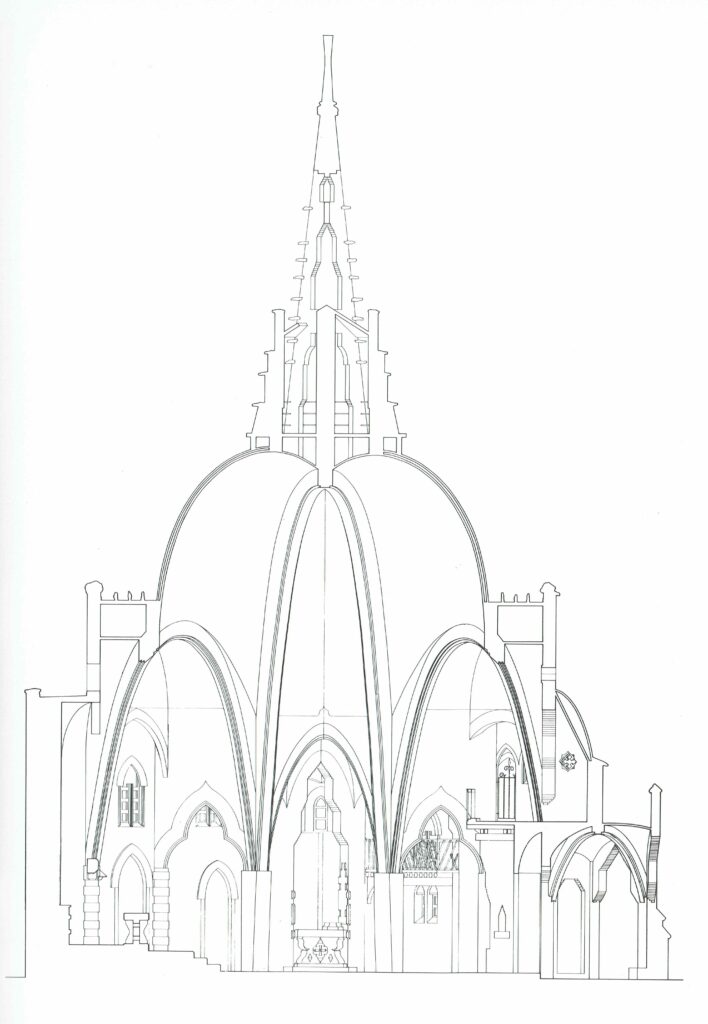
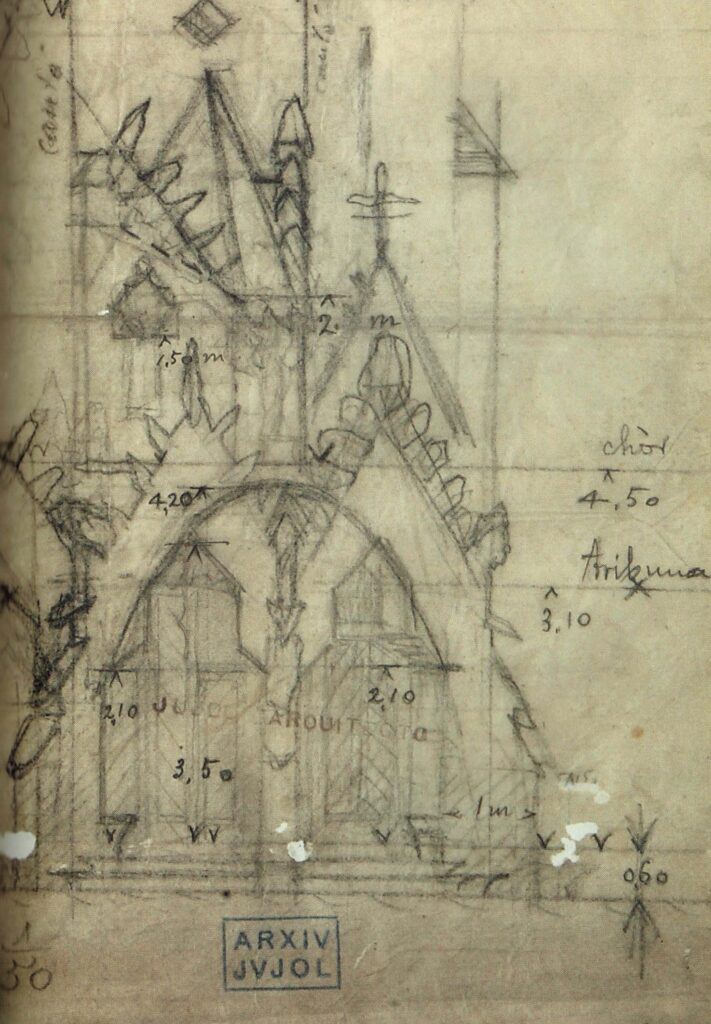
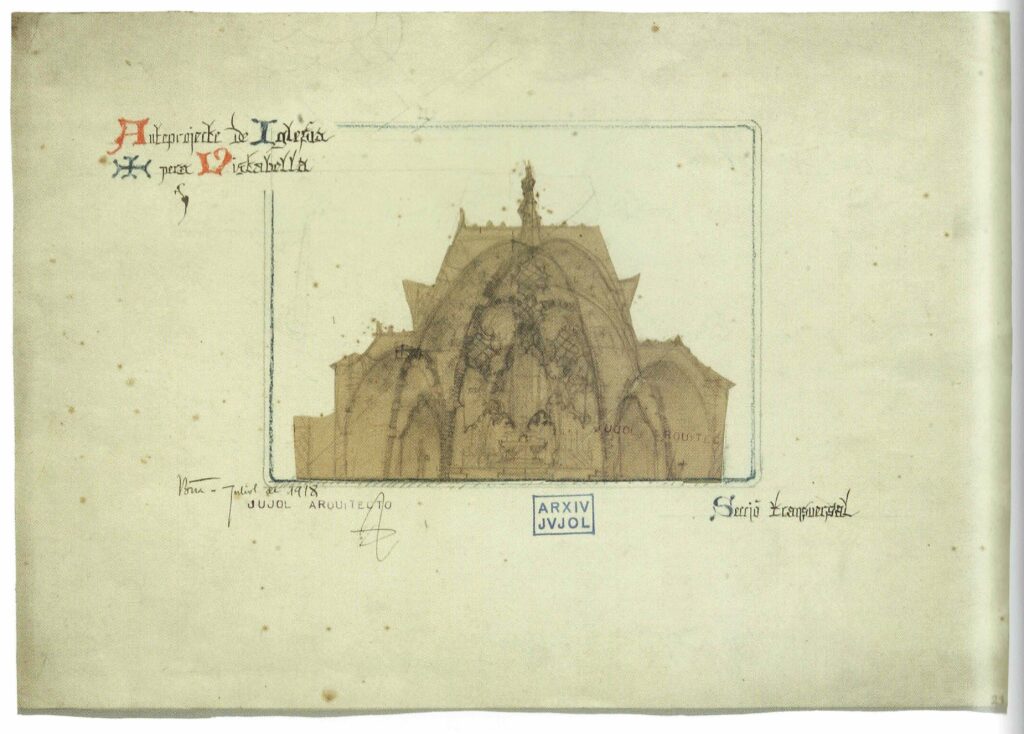
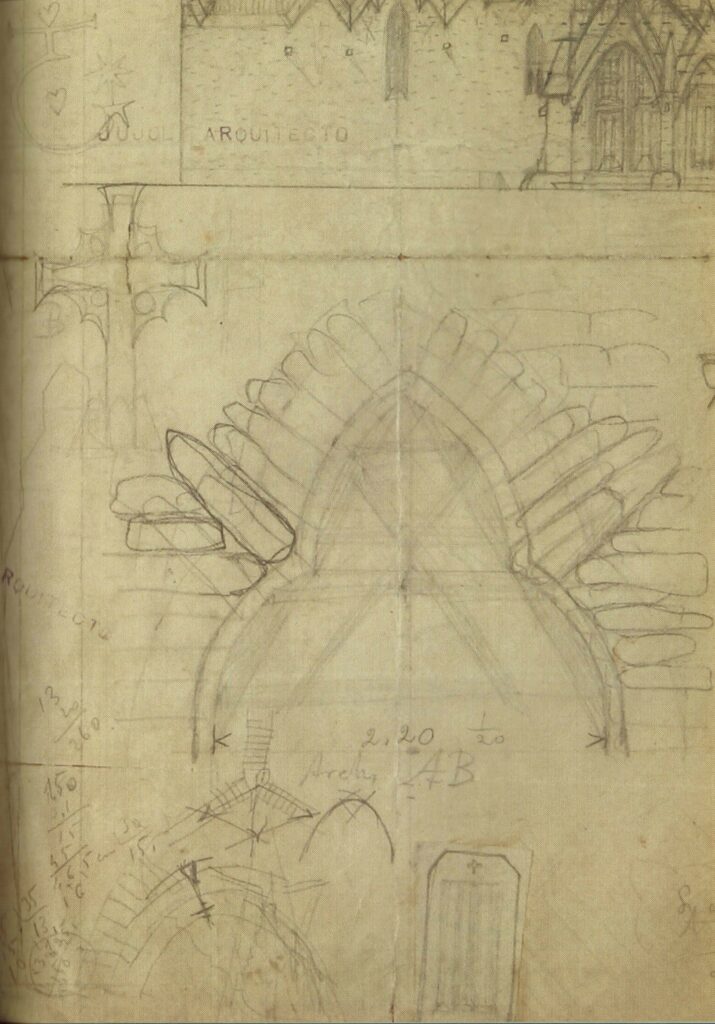
The structure of the church of Vistabella is a system of hierarchically arranged arches. There are three categories of arches. The first are the two parabolic arches that create the central void. These arches span seven metres, rise fifteen metres above the ground and meet at pilasters three metres from the ground. […] The hierarchy of the structure generates various spaces: the central one, of large dimensions; the two spaces linked to this central space along the major axis of the virtual rectangle; and the four triangular spaces left between the trilobed arches.
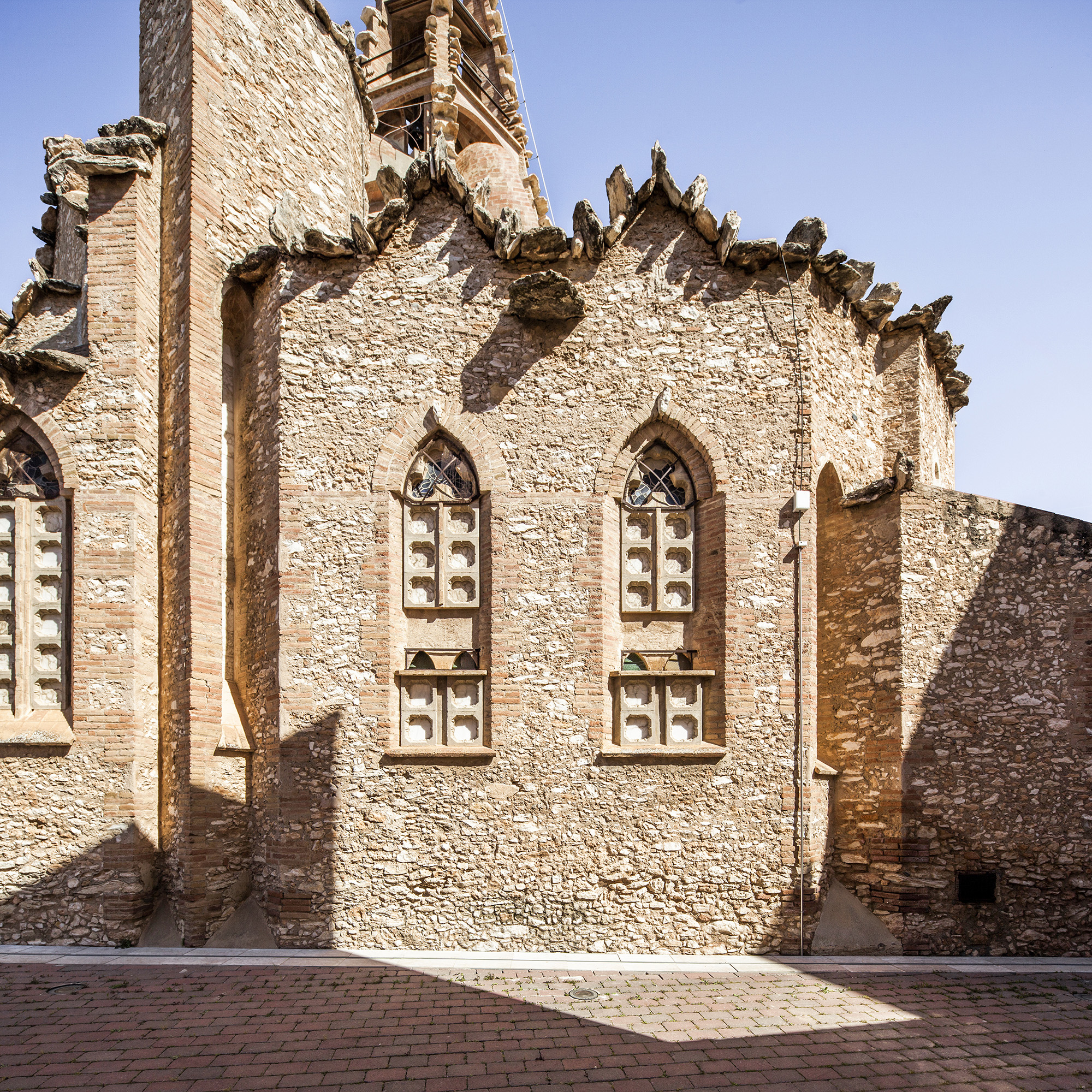
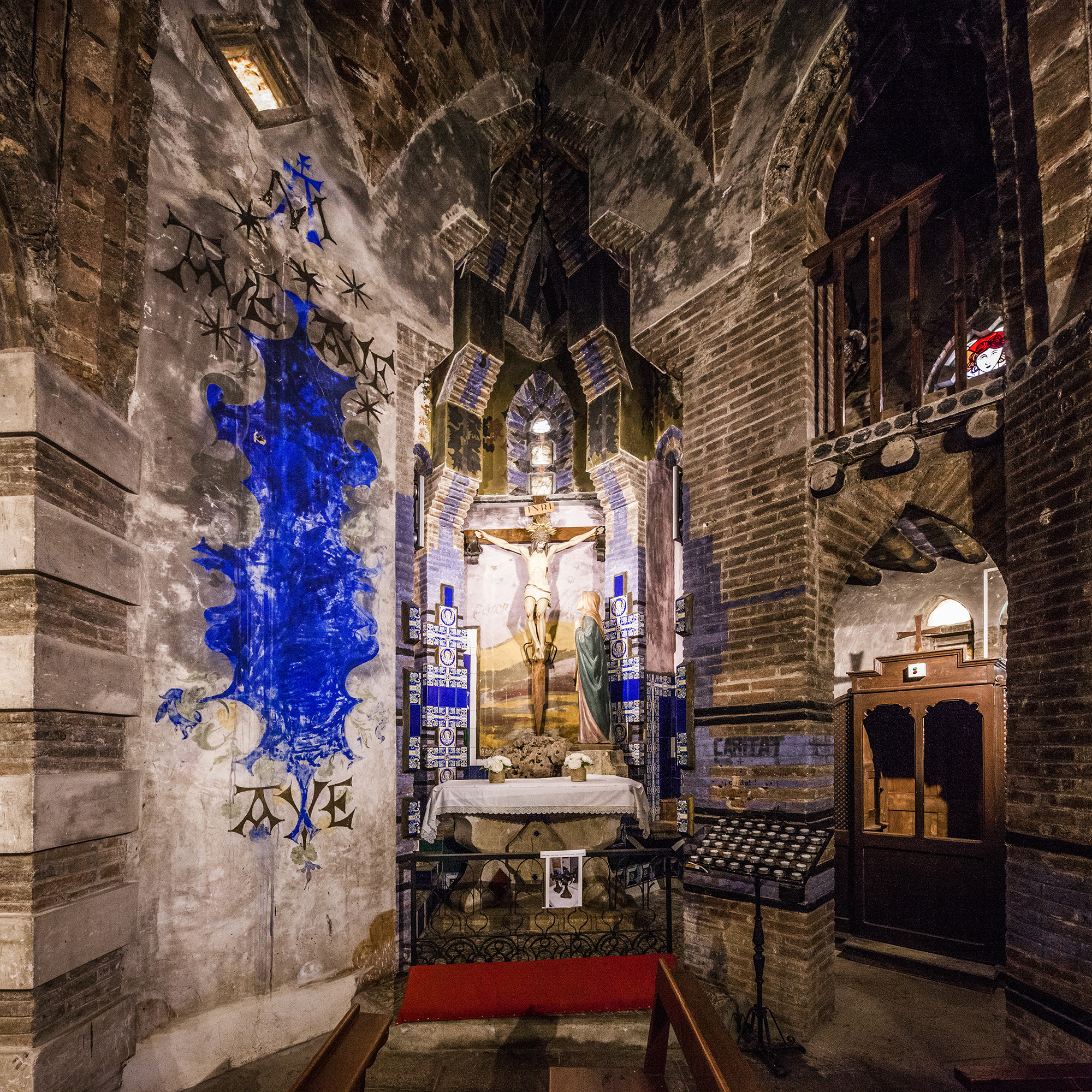
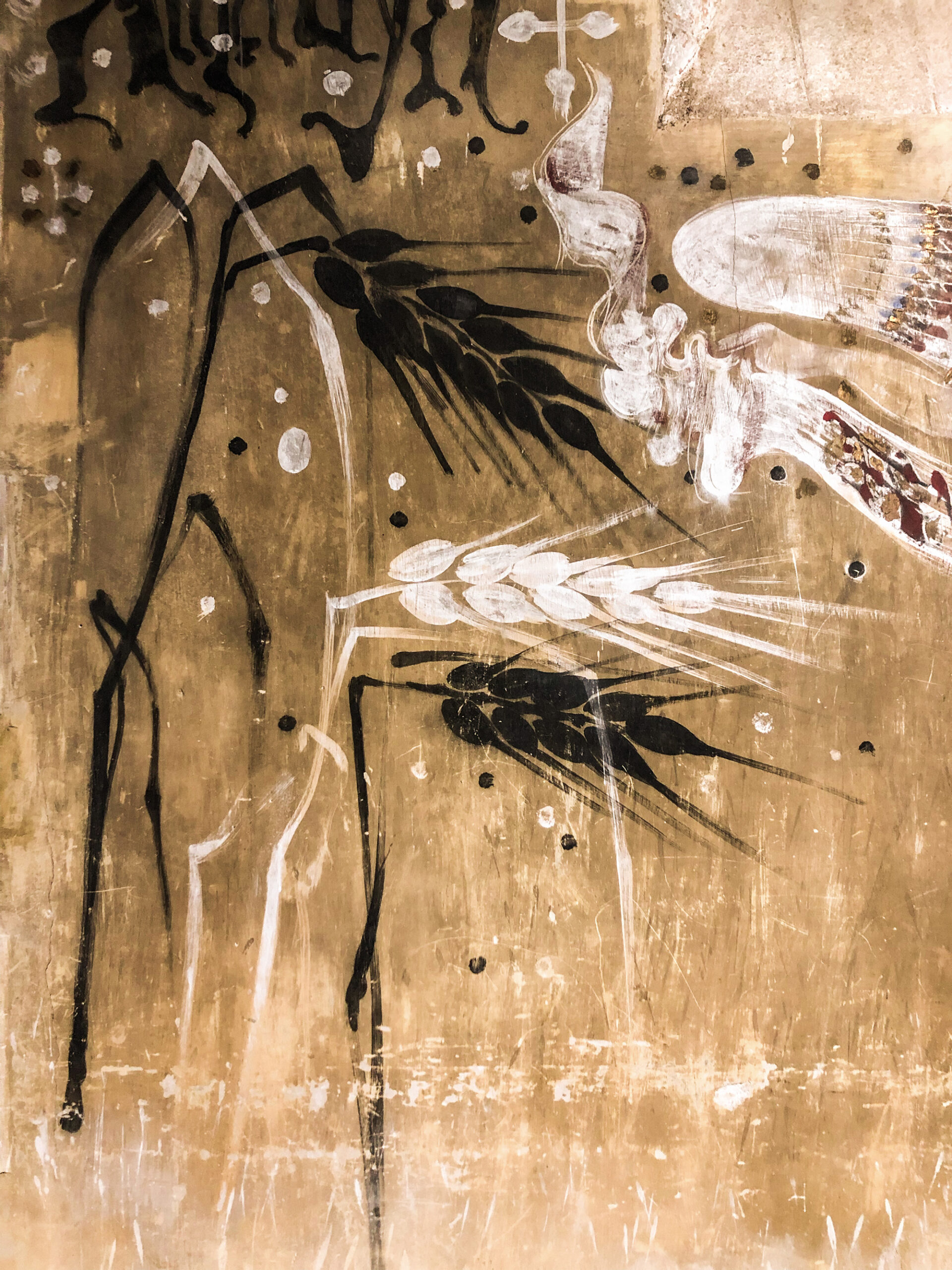
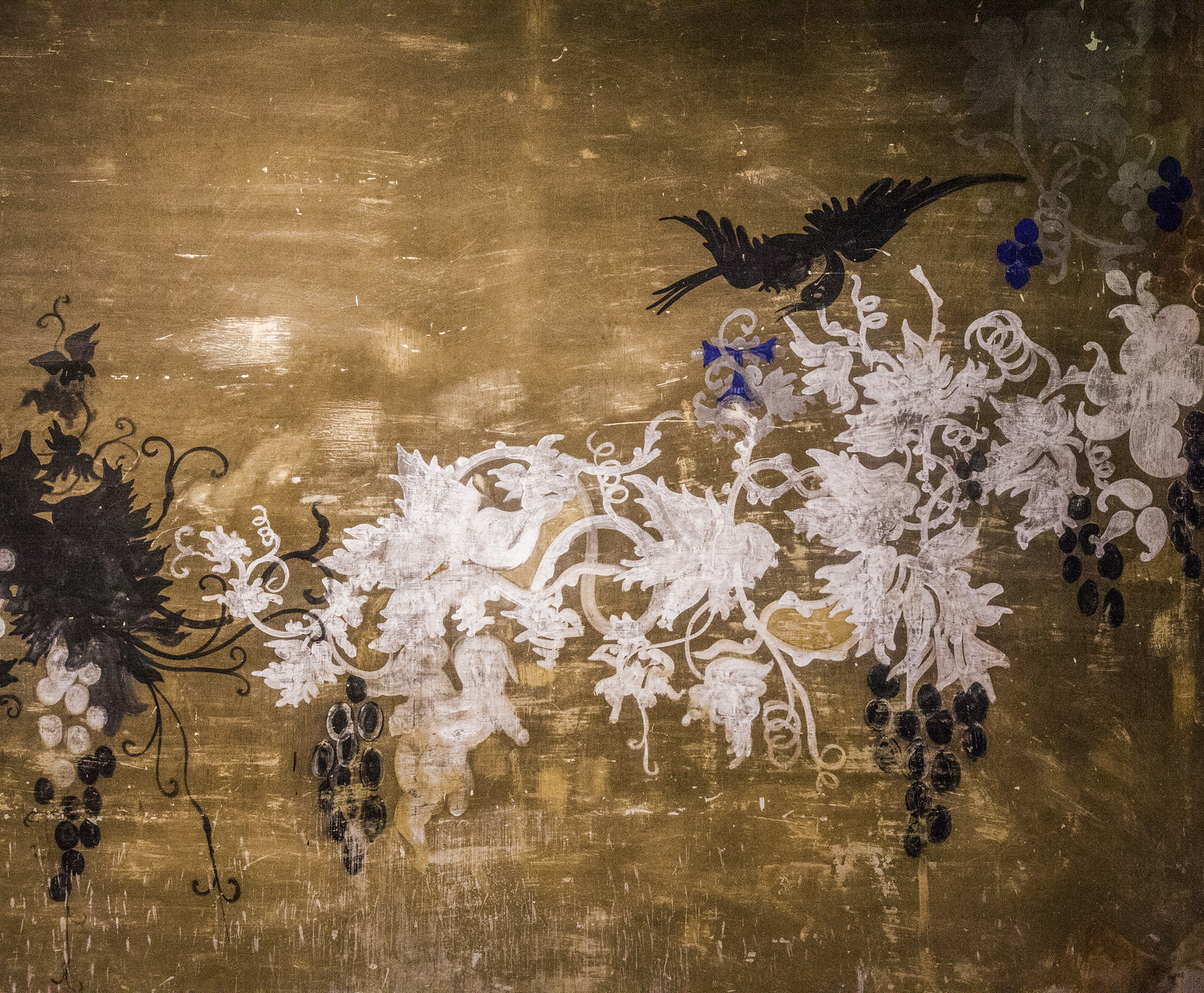
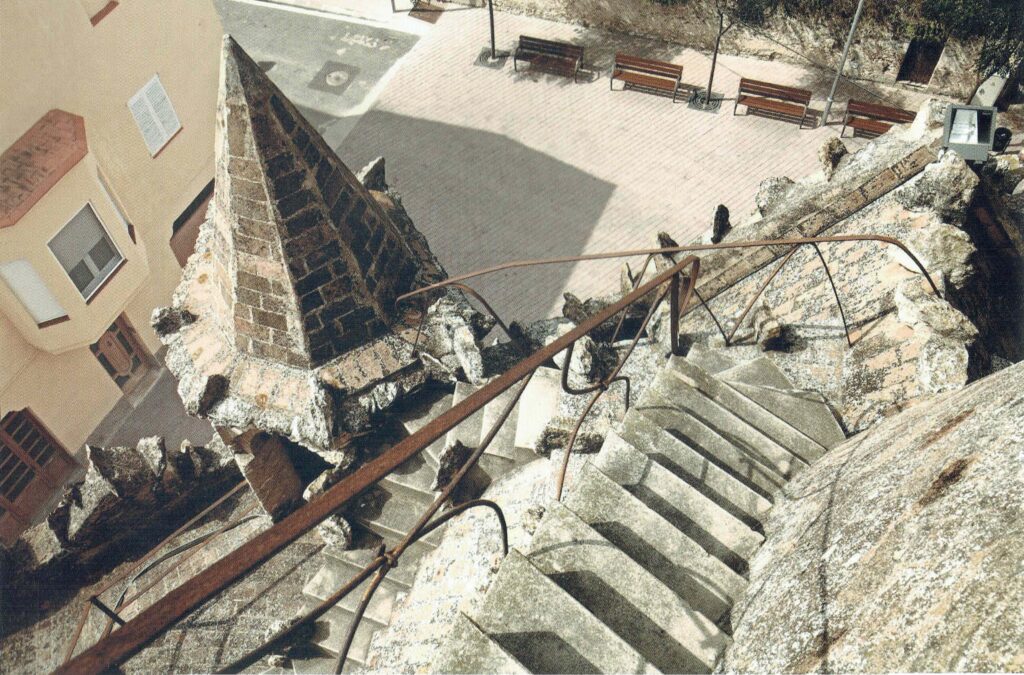
There is one aspect that is surprising: the stones placed on top of the ridges. Legend has it that, when Jujol went to the village, he was given the stones they had for the construction, and he would shut himself in a room and sort them. He would set aside the most beautiful ones and then indicate how they were to be placed, tracing the ridgelines of the building. […] These rocks not only trace the ridgelines of the building, but mark where the sky is; they are ornamental elements which, like the interior paintings, help to bring out the architecture.”
[Own translation from Catalan.]
Text:
- Miralles, Roger. «La creu de Vistabella». In: Carabí Bescós, Guillem (ed.). Josep M. Jujol: l’església primera de Vistabella: una mirada contemporània. Barcelona: dpr-barcelona, 2012, pp. 45-55. Translated from the Catalan.
Images:
- 1–21. Capeta Salvadó photos. From: Arxiu Municipal de Sant Joan Despí. Photographer: Marc Salvadó, 1918.
- 22–35. From: Carabí Bescós, Guillem (ed.), Josep M. Jujol: l’església primera de Vistabella: una mirada contemporània. Barcelona: DPR-Barcelona, 2012, pp. 18, 19, 21, 41, 114-117, 120, 121, 162, 163. Photographer: XX
Plans:
- 1-11. From: Carabí Bescós, Guillem (ed.). Josep M. Jujol: la primera iglesia de Vistabella: una mirada contemporánea (2012), pp. 88-93, 98, 99, 160, 161.
Acknowledgements: Documentation provided by the Arxiu Municipal de Sant Joan Despí, Sant Joan Despí Town Council — handled by Raúl Sanz Serrano, Municipal Archivist.